Event Experience Design: A Practical Guide for Organizers

Event experience design is the practice of deciding what your guests should feel, do and remember at each moment of an event, then working backward to the venue, food, schedule and budget that deliver it. You can do it without a design firm: write down the one thing guests should remember, map their journey from invitation to follow-up, and spend where they will feel it. Jubiliq keeps the guest list, budget, vendors, tasks and day sheet in one place, so those design choices turn into a plan you can run.
TL;DR
- Experience design starts with the guest’s journey, not the venue or the decor. Logistics follow from it.
- Pick one “hero” idea and fund it well. A single idea done properly beats a dozen done thinly.
- Map the journey from invitation to thank-you email, noting what each guest needs to know and what could go wrong.
- Build comfort and access into the budget first, then add the memorable moment.
- Measure what guests did, not just whether they said they enjoyed it.
Table of Contents
- What event experience design actually is
- Start with who it is for and what they should remember
- Map the guest journey from invitation to follow-up
- The design elements that make it feel cohesive
- Design on a budget: spend where guests will feel it
- Make it comfortable and accessible for everyone
- Measure what guests did
- Where Jubiliq fits
- Our perspective
- FAQ
- Sources
What event experience design actually is
Event planning is operations: venues, vendors, schedules, budgets and registrations. Experience design is centered on people: emotions, expectations, storytelling, hospitality and sensory elements across the journey before, during and after the event. Both are needed. Design decides what the event should feel like; planning makes it happen.
It is also not decoration. Decor is the physical objects in a space, while design is the strategy behind those choices: flow, the emotional arc from arrival to exit, the sensory environment and the story. A beautiful room guests cannot navigate is a design failure, because every choice around flow, color, lighting, sound and sequencing either supports the attendee journey or works against it.
The order matters too. Design decisions come before logistics: you cannot contract a venue until you know the spaces you need, and you cannot finalize catering until you know whether the evening is a seated dinner or a standing cocktail hour. If you are weighing that choice, our guide to plated versus buffet service walks through it.
Start with who it is for and what they should remember
Before sketching a layout, answer four questions in writing:
- Who is coming? A wedding crowd of grandparents and college friends, a table of corporate clients, donors at a gala and golfers at an outing want different things.
- Why are you holding it? Planning resources separate purpose (the why), goals (measurable outcomes) and objectives (specific actions). Purpose: honor a couple. Goal: raise a set amount. Objective: open the paddle raise by a set time.
- What should guests think, feel and do? Decide this for before, during and after the event, and document who the event serves so your results can be traced back to your goals.
- What is the one thing they should remember? One strategy guide suggests writing it down before you sketch layouts, so it becomes the organizing idea that keeps everything else from drifting into noise.
A useful test: if a guest can describe the event in one sentence a week later, the editing was right. “The sunset ceremony with the whole family at long tables.” “The gala where we funded the new wing.” “The outing with the closest-to-the-pin prize on hole 7.”
For galas and fundraisers, the same thinking runs from first goal to final thank-you in our gala planning guide.
Map the guest journey from invitation to follow-up
The experience does not begin at the door. Roughly half of a guest’s impressions form outside the room, and the journey runs from the invitation to the follow-up email. Write the sequence as steps: invitation, registration, travel, arrival, orientation, first interaction, program, breaks, exit and follow-up. For each step, note what the guest is trying to do, what they need to know and what could go wrong.
A simple grid works:
| Stage | Guest goal | What could go wrong | Your fix |
|---|---|---|---|
| Invitation | Know if it’s for me, when and where | Unclear dress code or date | Clear invite with details |
| RSVP | Reply easily, share meal needs | Replies scattered across texts and email | One RSVP form with meal choices |
| Arrival | Find parking and the right door | Guests circle the lot | Directions and a greeter |
| Program | Know what is next | Long gaps, no signage | Posted schedule, emphasized key moment |
| Exit | Leave smoothly | Crowded departures, no goodbye | Planned send-off |
| Follow-up | Feel thanked | Silence | Thank-you message within days |
Build the map around one specific guest type at a time, and record each stage’s goal, touchpoint, question or emotion, friction and owner. Naming an owner matters: when the shuttle is late, someone should already be responsible.
Most of the journey’s friction is communication. Our guest communication plan shows how to keep RSVPs and messages in sync, and for larger lists, RSVP tracking that holds up past 20 guests keeps your headcount honest for catering and seating.
The design elements that make it feel cohesive
Immersion does not require expensive technology. It can come from lighting that changes mood, sound that supports a key moment, space design and encouraged participation, as long as staging, visuals, audio and interaction all serve one clear idea. Think of the arc as arrival, exploration, main program, key moment and departure.

Layout and flow. Guests should know where to go without asking. Zones mapped to the event’s themes help, and one guide reports that 70% of attendees say layout and flow influence their perception of a brand. For standing receptions, aisle width decides whether people mingle or jam up; see these standing reception layouts with 1.5m aisles for a concrete reference.

Lighting. Use it with intent: bright and warm at arrival, focused on the key moment, softer for dinner conversation.
Sound. Sound controls energy and pace: quiet during toasts and speeches, livelier when you want people moving.
Food. Menu is part of the story, and it is also where guests feel looked after. Plan it deliberately with our event menu planning guide.
Seating and details. Think about sightlines over centerpieces, menu readability in low light and seating needs, such as an older guest near restrooms or clear access for a wheelchair user.
Special guests. Donors, sponsors, honorees and clients notice the small touches. Our VIP guest management playbook covers them.
Design on a budget: spend where guests will feel it
Great design does not need unlimited resources. As one design lead puts it, an unlimited budget does not automatically produce the best experience, but intentional decisions do. The skill is deciding which ideas carry the event and releasing the ones that are merely pretty.
A workable order for a limited budget:
- Lock the non-negotiables first. Safety, accessibility, staffing and a quiet room, plus a contingency for on-site adjustments.
- Choose one hero moment and give it the largest share of the budget. A corridor of light done perfectly beats a corridor, a hologram and a mirror maze all done at 70%.
- Fund two senses deeply that carry your theme, such as light and music for a wedding, or food and sound for a client dinner.
- Cut the rest and protect empty space so the hero moment can breathe.
Practical examples: a bride on a budget might skip a full floral install and put the money into candlelight and a great sound system for the ceremony. A nonprofit might spend on a short, moving program rather than elaborate centerpieces. A golf outing might invest in the on-course experience, such as a standout prize hole, and keep the clubhouse simple.
The discipline works only if you can see where money is going. A 12-category corporate event budget is a good template for tracking, and the same categories translate to weddings and fundraisers. Production details such as tickets, passes and parking are also design choices; this piece on custom event parking ticket design shows how they fit within venue and budget limits.
Make it comfortable and accessible for everyone
Accessibility belongs in the brief from the beginning. As one design lead says, accessibility, neurodiversity, well-being and psychological safety are part of the brief now, not add-ons. Practical steps:
- Offer a quiet space. Industry guidance recommends recovery spaces such as quiet rooms and more intimate networking options.
- Ask about access and dietary needs on the RSVP, so you can plan seating, routes and menus before the day.
- Make step-free routes, clear signage and readable menus standard.
- Budget for it. In one large inclusion project, 35% of the delivery budget went to access costs, which the guide describes as the most variable part of an inclusive budget. For a wedding or gala the share will differ, but setting a line for it early prevents last-minute scrambling.
Measure what guests did
Satisfaction surveys mostly capture hospitality. Behavior tells you whether the design worked. Track completion, dwell time in the areas you invested in, drop-off between registered, arrived and stayed, and how many distinct guests took part. Build those measures into the day in advance.
In practice: compare RSVPs, check-ins and final headcount; note how many guests were still there for the key moment; for a fundraiser, compare donations and ticket sales to your goal; then send a short follow-up asking one or two specific questions, like whether guests knew what was happening next. Mundane problems, such as guests unsure whether lunch was provided, often show up this way.
Where Jubiliq fits
Design ideas only work when the details behind them are handled. Jubiliq is an event planning platform that adapts its interface to the type of event, so a wedding, a corporate event, a gala or a golf outing sees the tools it needs and nothing else. It covers guest lists with RSVP tracking, budgeting, vendor and contract management, task scheduling, seating and catering workflows, segmented email blasts and a printable day sheet, so the journey you mapped becomes a schedule people can follow.
Pricing is simple. The Starter plan is $0 one-off per event, and events without paid tickets, such as weddings and parties, are free, including planning-only mode. The Organizer plan is 2% per paid registration, plus Stripe fees, for ticketed events and fundraisers. Enterprise is available for multi-event organizations. See the plans at Jubiliq.
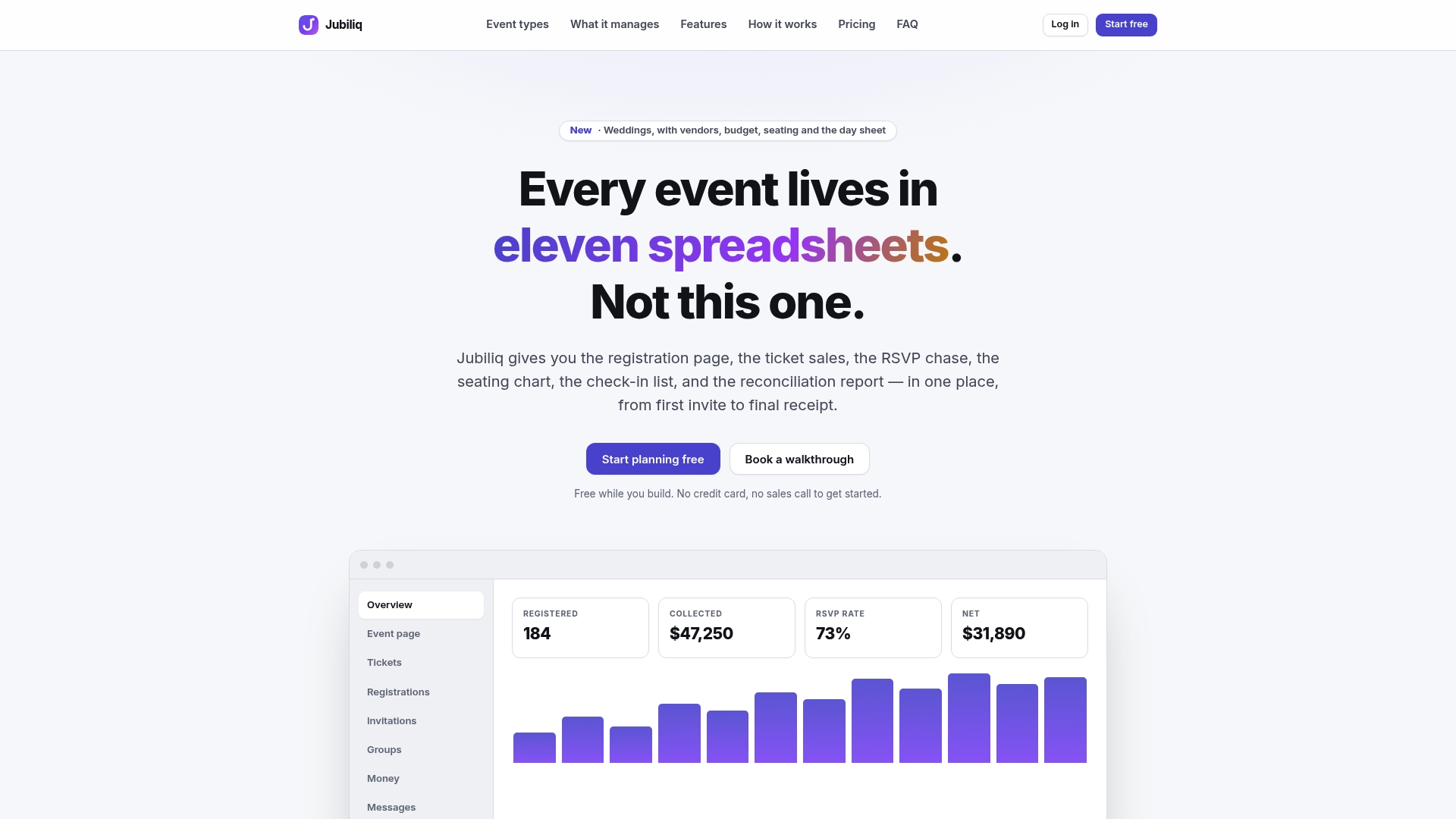
If you sell tickets, sponsorships or take donations, real-time dashboards and CSV export for your accounts keep your numbers in view while you spend where it counts.
Our perspective
Most event stress comes from details that live in too many places: a spreadsheet for guests, a thread for vendors, a notebook for the budget. When that happens, organizers spend their energy chasing information instead of shaping the guest’s experience.
We built Jubiliq so the interface adapts to your event. A bride sees seating, vendors and budget. A fundraising team sees tickets, sponsors and donations. A golf outing host sees what an outing needs. Hiding what is irrelevant leaves room for the decisions that make an event feel considered.
Our view is that experience design is the habit of deciding what matters, then making it easy to run. One place for invitations, RSVPs, budget, tasks and the day sheet means the plan you design is the plan your team and vendors actually follow.
HCRF
FAQ
Is event experience design only for big corporate events?
No. The same questions apply to a backyard wedding, a gala or a golf outing: who is coming, what should they feel and what will they remember. Small events often benefit most, because one well-chosen moment can define the whole day.
How is experience design different from event decor?
Decor is the physical objects in the room. Design is the thinking behind them: flow, sequence, sensory environment and story. Good design can use very simple decor, while beautiful decor in a confusing layout still disappoints guests.
Where should a small budget go first?
Start with comfort, access and safety, then fund one hero moment well. Skip features that do not support your central idea, and keep a contingency for surprises on the day.
How early should I map the guest journey?
Before you book the venue or caterer. The journey decides the spaces, timing and food format you need, so mapping it first prevents costly changes later.
Sources
- TVD Fellowship: Experience design vs event planning
- Borrowed Charm OKC: What is event design
- Cohera: Design matters
- AhaSlides: Event designing 101
- Southland NZ: Defining your event
- ITA Group: Guide to event strategy
- JPC: Guide to high-performance event experiences
- Orora: Less is more in event management
- Eventkraft: Applying UX methods to event design
- The Event Planner Expo: Attendee journey guide
- DOREMi: Immersive event experience
- New Orleans Music Events: Multi-sensory experiences
- Ocean Signature: Decorating vs designing
- PCMA: Guiding principles in experience design
- Spirit of 2012: Critical Mass playbook
- Standing reception layouts
- Custom event parking ticket design