VIP Guest Management: A Practical Playbook for Events

VIP Guest Management: A Practical Playbook for Events
VIP guest management is the work of identifying the guests who need special handling, deciding in advance what they receive, and making sure every team member delivers it the same way. At an event, that means a tagged guest list, a named point of contact, a clear arrival path, a short menu of approved perks and a day-of plan everyone can read. Hotels write about this constantly, but the same discipline applies to weddings, galas, golf outings and corporate functions. This guide shows how to set it up without blowing your budget or your staff’s patience.
TL;DR
- Decide who counts as a VIP before invitations go out, and tag them in your guest list so every later decision follows from that tag.
- Name one VIP coordinator and one point of contact. Give VIPs a finite menu of choices, not unlimited options.
- Map the VIP’s whole path: transport, parking, entrance, seating, hospitality and exit, plus accessibility and any companions.
- Collect only the guest information you need, share it only with the people who use it, and keep the day sheet current.
- Budget at least 10 percent contingency, because VIP requests are where surprises tend to land.
Table of Contents
- What VIP guest management means at an event
- Step 1: Build the VIP list early and tag it
- Step 2: Name a coordinator and one point of contact
- Step 3: Map the VIP’s path through the event
- Step 4: Offer a menu of choices, not a blank check
- Step 5: Protect access, security and privacy
- Step 6: Brief your team and communicate in real time
- Adapting VIP management to your event type and budget
- A VIP checklist you can copy
- Perspective
- Plan your VIP guests in one place
- FAQ
- Sources
What VIP guest management means at an event
In hospitality, a VIP program is about recognizing a valuable guest and personalizing their stay. At an event, the idea is the same but the scale is different. You have one evening, one venue and a fixed number of staff, so VIP handling is really a set of decisions made ahead of time: who qualifies, what they get, who delivers it and what happens when something goes wrong.
Who counts as a VIP depends on the event. One official planning guide from Western Australia describes dignitaries and VIPs as people of high rank or office who should receive special courtesy, such as government representatives, ambassadors, senior public servants, academic leaders and community or religious leaders. That is a useful starting point for civic and nonprofit events. For other events, the list looks different:
- Weddings: grandparents, the officiant, parents who are hosting, a guest traveling with a medical need, a wedding party that needs a separate arrival time.
- Corporate events: key clients, executives, keynote speakers, sponsors and press.
- Fundraisers and galas: top donors, table hosts, honorees, board members, auction underwriters and local officials.
- Golf outings: title sponsors, foursomes that bought premium packages, guest speakers and celebrity players.
- Large parties: the guest of honor, the host’s family and anyone who needs step-free access or a quiet space.
Write your definition down. A one-line rule such as “sponsors at the $5,000 level and above, board members, honorees and speakers” prevents an argument at the door and makes it easy to explain why someone did or did not receive a perk.
Step 1: Build the VIP list early and tag it
Most VIP problems start with a list that lives in three places. A host remembers one name, a sponsor emails another and the venue gets a third version. Put everyone in one guest list from the start and give each VIP a tag, a tier if you need more than one level, and a note field for the details that matter.
Useful fields to capture for each VIP:
- Name as they prefer to be addressed, and the title to use on signage and in announcements.
- RSVP status, party size and names of companions.
- Dietary needs and allergies, so catering is never guessing.
- Accessibility needs, such as step-free entry, seating near an exit or a quiet area.
- Arrival method: driving, rideshare, shuttle, private car or on foot.
- Who on your team owns the relationship.
- Seating or table assignment, and any people they should or should not sit near.
If you plan in Jubiliq, this is where the guest list and RSVP tracking earn their keep. You can see responses in one place, group guests, and send segmented email updates to just your VIPs without blasting the whole list. Our guide to guest communication covers how to keep RSVPs and plus-ones synced so your VIP count is never stale.
Step 2: Name a coordinator and one point of contact
When a VIP has three people to call, nobody is accountable. The NCAA’s venue safety guidance for large events recommends designating a VIP coordinator and establishing a single, consistent point of contact. It also suggests reviewing venue walkthroughs, designating a VIP entrance, confirming credentials and entry and exit timelines, and planning for family, friends or associates who accompany the guest.
You do not need a security detail to borrow the idea. Scale it to your event:
- A wedding: the coordinator might be a trusted friend or the planner. Give grandparents and the officiant that person’s mobile number and a printed card.
- A gala: assign a host to each top table. They greet donors by name, walk them to their seats and handle requests.
- A golf outing: one person meets sponsor foursomes at registration, hands over the cart assignment and stays reachable through the round.
- A corporate event: the account manager owns the client, and the coordinator owns the logistics.
The point of contact should be someone with authority to say yes to small things without finding a manager, and to escalate larger ones fast.
Step 3: Map the VIP’s path through the event
Sketch the journey from the moment a guest leaves home to the moment they get back. Every handoff is a place where something can slip.
Arrival and parking
Decide where VIPs park or are dropped off, who meets them and how they reach the entrance. For a golf outing, tie guest status to transport, parking, tee times or activity schedules and hospitality spaces. The NCAA guidance recommends reviewing transportation, parking, escorts, passes, entry and exit timelines, credentials and accessibility before the event, and that checklist adapts well to a charity tournament or a client day.
Entrance and check-in
A separate entrance or a dedicated check-in lane is the single most visible VIP signal. If your venue only has one door, use a separate table with a named greeter. Print the VIP list on your day sheet so a volunteer who has never met the donor can still find their name in seconds.

Seating, food and hospitality
Seating is where VIP planning and everyday planning meet. Use your seating chart to place VIPs where they can see the program, reach the exit and sit with the people they came to see. Align catering with their notes: dietary needs, timing of courses and any special plates. If you are still building your food plan, our step-by-step event menu guide and the advice on putting catering duties in writing help you make sure the caterer actually delivers what you promised a top guest.
Accessibility
Treat access as a baseline for every guest, not a VIP perk. The Western Australia guide lists access for people with disabilities among venue-selection considerations and includes disabled access on its site-plan checklist. Check step-free routes, accessible restrooms, seating with space for mobility devices and the walk from parking to the door before you assign anyone a VIP path. If a VIP is also a guest with access needs, make the accessible route and the VIP route the same one.
Step 4: Offer a menu of choices, not a blank check
The hardest part of VIP management is saying no gracefully. A donor asks to bring four extra guests. A sponsor wants the stage for ten minutes. A client wants a table moved at the last minute. If you improvise every answer, you will treat people unevenly and strain your staff.
The NCAA guidance recommends giving VIP teams a finite number of operational choices instead of unlimited options. That is a practical way to balance personalization with venue, safety and staffing limits. In plain terms: personalize inside limits you set in advance.
Here is what a menu might look like for a charity golf outing:
| Perk | Title sponsor | Foursome sponsor | Individual VIP |
|---|---|---|---|
| Dedicated greeter at registration | Yes | Yes | Shared |
| Choice of cart pairing | Yes | Yes | No |
| Hospitality tent access | Yes | Yes | Yes |
| Preferred table at dinner | Front table | Reserved table | Reserved seat |
| Recognition in program | Logo and speaking slot | Logo | Name |
This is an example you can adapt, not a standard. The value is in the structure: each tier has defined perks, and anything outside the table goes to the coordinator, who decides using a simple rule such as capacity, safety and cost.
When you have to decline, offer an alternative. “We cannot add a fifth seat at the table, but we can seat your guest at the adjacent table and bring them over for the toast” keeps the relationship intact and the room within capacity.
Step 5: Protect access, security and privacy
VIPs often care about discretion as much as attention. A few habits go a long way, and none of them require a big budget.
- Limit who sees the list. Your VIP tags and notes should be visible only to the people who need them: the coordinator, check-in leads and your host team. A volunteer on the coat check does not need a donor’s dietary or medical notes.
- Collect only what you need. Ask for dietary and access needs because you will act on them. Do not collect information you will not use.
- Be clear about how data is used. Tell guests on the RSVP form what you are collecting and why, and do not publish names on a public guest list without their consent.
- Plan movement, not just entry. Identify where a VIP can step away, where press can and cannot go, and how a guest leaves early without crossing the whole room.
- Coordinate with the venue. If a guest has a security team, share your run sheet and entry and exit timing with the venue and the team in advance, and brief your own staff on who has access to which areas.
- Plan for companions. Family, assistants and friends arrive with VIPs. Decide whether they count toward capacity and whether they get the same access.
If you publish an event website, consider whether VIP names should appear anywhere public. Planning-only mode, where the event is organized without a public page, is a natural fit for a private dinner or a family milestone. For more on that setting, our private event planning guide walks through the decisions.
Step 6: Brief your team and communicate in real time
The best VIP plan fails if only one person knows it. A pre-event briefing, even ten minutes, makes a visible difference. Staff communication guidance recommends clear communication goals, defined channel responsibilities, an escalation ladder, a kickoff briefing and targeted real-time alerts for staff on duty.
Apply that to VIPs:
- Brief everyone who touches a VIP. Greeters, servers, parking attendants and volunteers should know who the VIPs are, what they have been promised and who to call.
- Pick one channel. A group text, a radio channel or a shared task list. Not all three.
- Set an escalation ladder. Greeter to coordinator to event lead. Everyone should know where a problem goes next.
- Send targeted alerts. When a VIP arrives early or a car is delayed, tell the three people who need to know, not the whole team.
- Hand out a printed day sheet. A one-page sheet with the timeline, VIP names, contacts and table numbers works even when phones do not.
A printable day sheet and a shared task schedule are built into how Jubiliq runs the day, so the same information you entered while planning is what your team holds on the day. For the broader pre-event timeline, our corporate event checklist shows how to phase work from planning through wrap-up.
Adapting VIP management to your event type and budget
VIP handling should be proportional. A 40-person wedding does not need a credential system, and a 600-person gala does.
Weddings on a budget
Spend attention, not money. Reserve front-row seats for grandparents, give the officiant a clear arrival time and a place to wait, and assign a friend as the point of contact for older relatives. Flag guests with access needs in your list so the venue can prepare. These cost little and are the details people remember.
Corporate client events
VIPs here are tied to revenue, so use tiers. Pre-register key clients, send them a personal note with arrival details, assign a host from your team and share a one-page agenda. Track which clients attended so your sales team can follow up. Our guide to a 12-category corporate event budget can help you decide how much of your spend goes to hospitality.
Fundraisers and galas
Top donors expect to be known. Staffing guidance from a private event staffing company describes front-of-house roles such as reception hosts, coat-check attendants, cocktail servers, formal dinner staff, auction assistants and banquet captains for events from 100 to over 1,000 guests. You may not need every role, but assigning a host to each major table is often worth it. Track sponsorship and ticket sales next to your guest list so you can see which donors are attending and where they sit.
Golf outings
Golf adds moving parts: carts, tee times, on-course hospitality and a post-round program. Tag sponsor foursomes in your list, publish a schedule, and give each VIP group a printed card with their start time, cart number and contact. Build the transport and parking plan around the first tee time.
Large parties
For big family or community parties, VIP means the guest of honor and anyone with specific needs. Plan food, seating and access early. Our large party planning guide covers food safety and accessibility starting three months out.
Build in contingency
VIP requests tend to appear late. The Western Australia guide recommends including contingency in the budget and gives at least 10 percent as a planning guide. It also lists security, first aid, accessibility, transport, catering and personnel among the costs to consider. Setting that buffer aside lets you say yes to a reasonable last-minute request without cutting something else.
The same guide says an event plan should cover purpose, outcomes, venue, audience, budget, resources, tasks, site plan, risk and emergency plans, traffic management, programme, run sheet, contacts and limitations. Your VIP plan can live inside that structure rather than beside it.

A VIP checklist you can copy
Use this as a starting template and trim it to fit.
Six to eight weeks out
- Define who qualifies as a VIP and at which tier.
- Add VIP tags and notes to the guest list.
- Name the coordinator and the point of contact.
- Confirm accessibility of the venue, entrance and parking.
Two to four weeks out
- Send VIPs a personal invitation or update with arrival details.
- Confirm dietary needs with the caterer.
- Finalize seating and the perk menu.
- Share your run sheet with the venue.
The week of
- Brief every team member who will meet a VIP.
- Print the day sheet with VIP names, contacts and table numbers.
- Reconfirm transportation, parking and entrance plans.
On the day
- Meet VIPs at the agreed point and walk them in.
- Keep one channel open for requests and delays.
- Log anything you promised on the spot so it is not forgotten.
Afterward
- Send a thank-you within a few days.
- Note what worked and what to change.
Perspective
We built Jubiliq around a simple observation: the more an event’s details live in separate tools, the more VIPs slip through the cracks. A top donor’s seating note sits in a spreadsheet, the dietary request is in an email thread and the arrival time is in someone’s text messages.
Our approach is to keep everything in one place and let the interface adapt to the event. A wedding shows you guest lists, RSVPs, budget and vendors. A gala adds tickets, sponsorships and donations. A golf outing adds the pieces a tournament needs. Options that do not apply are hidden, so you are not digging through features to find the ones you use.
For VIP guests, we think that matters. When your guest list, seating, catering workflow, tasks and printable day sheet share the same data, a change made on Tuesday is on the sheet in your team’s hands on Saturday. Real-time updates and progress dashboards help you see what is done and what is still open.
VIP management is not about lavish gestures. It is about knowing who matters to your event, deciding what you can offer them and making sure the right person delivers it.
HCRF
Plan your VIP guests in one place
If you are juggling a guest list, seating, vendors and a day-of timeline, we built Jubiliq to keep them together. Starter is $0 per event and works for weddings, parties and any event in planning-only mode, with no paid tickets. Organizer is 2% per paid registration, for events that sell tickets or take registrations. Enterprise is for organizations running multiple events, and its pricing is custom.
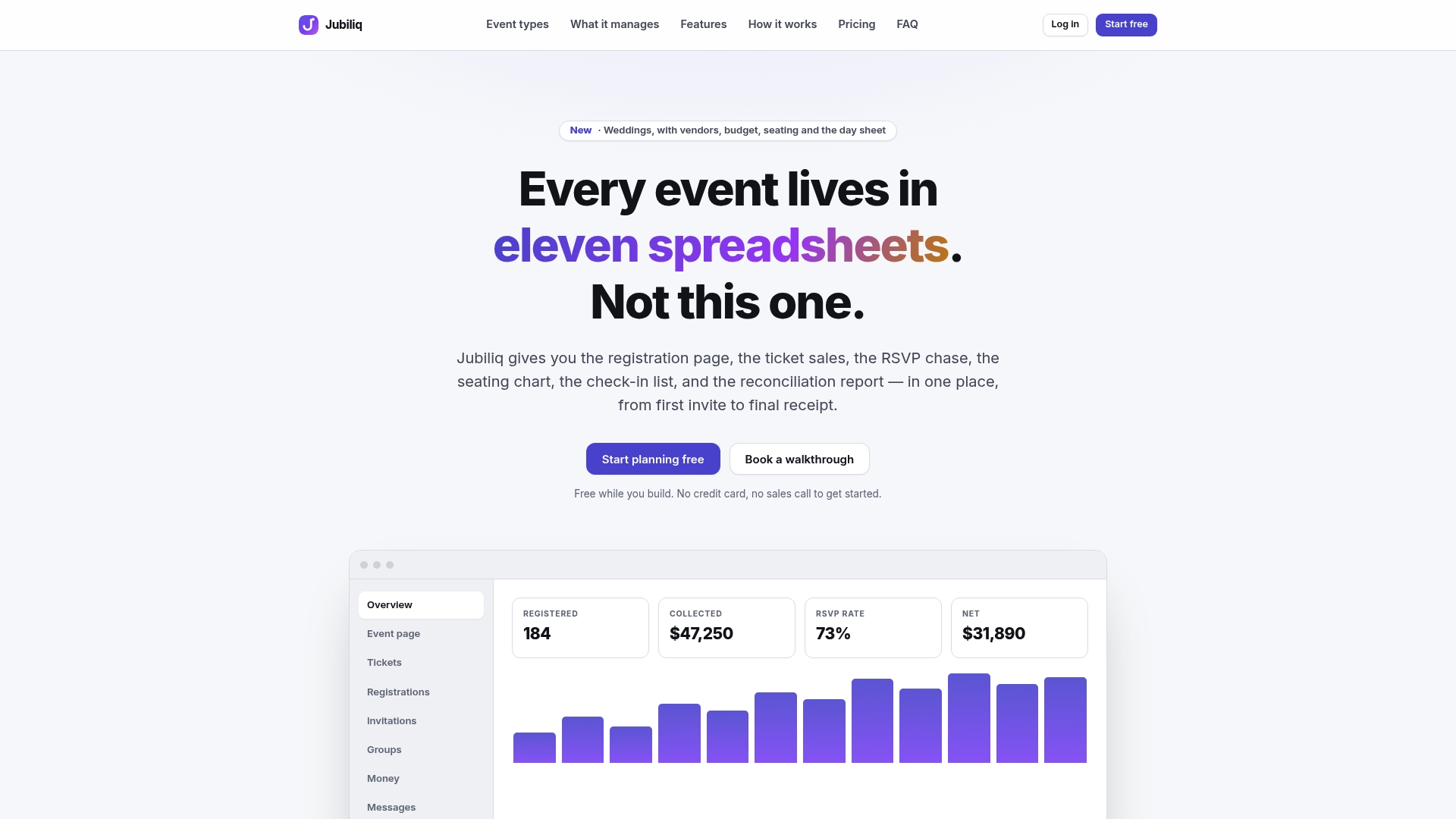
You can tag VIPs in your guest list, track RSVPs, assign tasks to your team and print a day sheet before the event. Start with the plan that matches your event and adjust as it grows.
FAQ
What is VIP guest management?
It is the process of identifying guests who need special handling, deciding what they will receive and coordinating the people who deliver it. At events, that includes list tagging, a named point of contact, a defined arrival path, seating and hospitality, and a day-of plan your team can follow.
Who should be treated as a VIP at an event?
That depends on your event and your goals. Official guidance describes dignitaries and VIPs as people of high rank or office, but at a wedding it may be grandparents, and at a gala it may be top donors and honorees. Write your criteria down before invitations go out.
How do you handle VIP requests without being unfair to other guests?
Publish a finite menu of perks for each tier and send anything beyond it to your coordinator. The NCAA recommends offering a limited set of operational choices so personalization stays within venue, safety and staffing limits. When you decline, offer an alternative.
How much should I budget for VIP guests?
There is no fixed number, since it depends on your event type and perks. A reasonable starting rule is to keep at least 10 percent of your budget as contingency, because VIP requests often arrive late. Then price the perks you have promised, such as hospitality, transport and extra staff.
Do I need a separate VIP entrance?
Not always. For large events, the NCAA guidance suggests designating a VIP entrance. At smaller events, a dedicated check-in table with a named greeter gives much of the same effect.
Sources
- Event Management Guide, Western Australia Office of Multicultural Interests (2020)
- Safety and Security Best Practices, NCAA (2024-25)
- Private Event Staffing for Galas, VIP Parties and Estates
- Ultimate Guide to Event Staff Communication