Large Party Planning From 3+ Months Out: Keep Food Safe and Accessible

Large Party Planning From 3+ Months Out: Keep Food Safe and Accessible
Plan a successful large party by following a timeline-driven checklist that locks budget, venue capacity, catering, crowd safety, staffing, and vendor coordination in that order. Date and venue come first, since every other decision depends on them, with budget close behind. Food safety and accessibility planning are not optional extras: they belong in your first planning meeting, not your last.
TL;DR:
- Confirming the venue and date at least three months in advance is crucial, as these determine nearly all other planning decisions.
- Setting RSVPs at least two weeks before the event helps finalize catering, rentals, and staffing, preventing last-minute shortages or overcapacity issues.
- Collecting dietary restrictions during RSVP and maintaining a detailed catering spreadsheet reduces food safety risks and cross-contamination.
- Accurately calculating usable venue capacity by considering vendor space, sightlines, and flow is key to avoiding overcrowding and logistical problems.
- Using a centralized planning platform to assign tasks, track budgets, and manage vendor contracts ensures seamless execution and minimizes last-minute surprises.
Table of Contents
- Time-ordered checklist for large parties (3+ months to day-of)
- How to set a realistic budget and translate guest counts into operational needs
- Menu planning, dietary logistics, and food-safety protocols for large groups
- Venue capacity, crowd flow, and integrating access & functional needs (AFN)
- Day-of roles, printable day sheet items, and incident-ready checklists
- How to write clear vendor agreements and operate a vendor run sheet
- Using a planning platform to convert checklist items into executed workflows
- Planner perspective: top mistakes when scaling a party
- Plan it once, run it from one place
- FAQ
- Sources
Time-ordered checklist for large parties (3+ months to day-of)
Large party planning fails most often when tasks get tackled out of order. A caterer booked before the guest count is set, or a budget drafted before the venue is confirmed, creates rework that compounds as the date approaches. Working in fixed time blocks keeps dependencies straight.
- 3+ months out: Define the event vision, lock your date and venue, draft a working budget, start vendor scouting, review local permit requirements, and form a planning team with named owners for each task.
- 6 to 8 weeks out: Confirm catering and rental contracts, open RSVP or ticketing, begin collecting dietary needs from guests, outline transport and parking logistics, and bring in an accessibility liaison to review the venue and guest list.
- 4 to 2 weeks out: Finalize the menu based on dietary counts, lock the staffing plan and run of show, confirm AV equipment and power capacity, verify refrigeration arrangements, and circulate a vendor run sheet to every contracted supplier.
- 1 week to day-of: Reconfirm final headcounts with caterers and rental companies, produce a printable day sheet, walk the venue with vendors, set a load-in and staging schedule, and brief all staff and volunteers on their roles.
Each stage should close with a short checklist review rather than a single person’s memory. A planning team of even three or four people, each owning a lane (budget, catering, logistics, guest communication), catches gaps that one overloaded organizer misses. Early planning also gives you room to negotiate with vendors rather than accepting whatever is available on short notice, a point echoed in general event planning checklist guidance for coordinating partners and assignments.
Pro Tip: Build your timeline backward from the event date, then add a two-week buffer before each milestone so a late vendor response does not collapse the whole schedule.
How to set a realistic budget and translate guest counts into operational needs
A workable budget starts with line items, not a single lump sum. Break your total into food and beverage, venue rental, staffing, rentals (tables, tents, linens), entertainment, permits, and a contingency line. Most overruns show up in food and beverage, last-minute rental additions, extra staffing for larger-than-expected crowds, and permit fees that organizers forget to check until weeks before the event.
- Calculate per-guest cost by dividing your total food and beverage budget by confirmed headcount, then revisit that number every time RSVPs update.
- Add a contingency line of 5% to 15% of total budget to absorb last-minute rentals, weather-related changes, or additional staffing needs.
- Use ticketed or timed RSVPs with a firm cutoff date to lock your headcount early enough for catering and rental orders.
- Build a waitlist instead of overbooking, so you can fill cancellations without exceeding venue capacity.
- Consider tiering guests (VIP versus general admission) when space or budget is tight, so expectations are clear from the invitation stage.
RSVP cutoffs matter more at scale than they do for a dinner party. A two-week cutoff before the event gives caterers time to finalize orders and gives you time to chase non-responders, rather than guessing at final numbers the week of the party.
Menu planning, dietary logistics, and food-safety protocols for large groups
Feeding a large group safely starts with data, not guesswork. Collect dietary restrictions during RSVP, not at check-in, and maintain a catering spreadsheet that breaks counts down by restriction and by function (cocktail hour, dinner, late-night snack). This structured approach, recommended for large-scale conventions, applies just as well to a 100-person backyard party as it does to a corporate gala.
- Assign one catering contact responsible solely for dietary logistics so questions do not get lost between vendors.
- Choose a service model based on scale: plated service works well for smaller, seated formal events, while buffets or food stations handle large, mixed-mobility crowds more efficiently.
- Design distribution so dietary-specific meals are clearly signed or individually plated and sealed rather than mixed into general stations, which reduces cross-contamination risk.
- Add a 5% to 10% buffer for common dietary restrictions when placing your final catering order.
Food safety is where many large events quietly go wrong. Hot and cold foods must stay out of the 40°F to 140°F “danger zone,” and relying on a single large ice bath for a multi-hour display is not sufficient for food held over long periods, according to food safety guidance for large gatherings. Require temperature logging at intervals throughout service, and put refrigeration and reheating responsibilities in writing in your catering contract rather than assuming the vendor will handle it by default. On-site reheating has its own failure points, and a reheating checklist for event planners is worth reviewing before you finalize your service plan.
Venue capacity, crowd flow, and integrating access & functional needs (AFN)
Capacity numbers printed on a venue’s website rarely match usable capacity once you account for a bar, a stage, a dance floor, and sightlines to a head table. Walk the space in person with your final floor plan and vendor footprint marked out before you confirm your guest count against that number.
- Calculate usable capacity by subtracting vendor and equipment footprint (catering stations, AV, staging) from the venue’s stated maximum, then checking that sightlines and walking paths still work at that density.
- Phase arrivals and departures instead of inviting everyone for the same start time, since staggered entry reduces dangerous queueing at a single entrance.
- Separate pedestrian and vehicle routes, coordinate with transport operators if guests are arriving by shuttle or rideshare, and station staff at entrances, exits, and any pinch points.
- Appoint an accessibility coordinator early rather than retrofitting access after the floor plan is set, a practice that emergency planning guidance identifies as more effective than last-minute adjustments.
An accessibility coordinator or small AFN advisory group should also help form an evacuation assistance team and confirm that emergency communications reach guests through more than one channel (visual signage, PA announcements, and staff on the ground), since a single communication method can fail or go unnoticed in a crowd. Reviewing how venue accessibility actually works in practice helps you ask venues sharper questions before booking.
Pro Tip: Walk your venue at the actual time of day your event will run, since lighting, sun glare, and foot traffic patterns change dramatically between a morning site visit and an evening event.

Day-of roles, printable day sheet items, and incident-ready checklists
A large party needs named roles, not general helpers. At minimum, assign an event manager (overall decisions), a chief steward (crowd flow and entrances), a catering lead (food timing and dietary distribution), an AV lead (sound and power), and an accessibility liaison (guest support and evacuation assistance).
- Build a printable day sheet with a minute-by-minute timeline, every vendor’s phone number, a site map, marked accessibility points, and emergency contact numbers, since a single printed reference point reduces day-of confusion more than scattered text threads.
- Decide in advance who handles a lost child, a medical event, or a vendor failure, and make sure every staff member knows that chain of command before guests arrive.
- Keep one vendor contact per category (one catering number, one AV number) so staff are not guessing who to call under pressure.
How to write clear vendor agreements and operate a vendor run sheet
Vendor contracts should spell out delivery windows, who is responsible for temperature control in transit, a substitution policy if an item is unavailable, staffing guarantees, insurance coverage, and cancellation or force majeure terms. Vague contracts are where day-of disputes start.
- Build a vendor run sheet listing each supplier’s service location, access route into the venue, power or technical requirements, and an escalation contact if something goes wrong.
- Schedule pre-event testing for AV equipment and refrigeration units at least a few days before the party, not the morning of.
- Walk the venue with vendors in the final week so load-in routes, power drops, and staging areas are agreed on ahead of time, not negotiated under time pressure.
Using a planning platform to convert checklist items into executed workflows
A checklist only works if someone tracks it. Assigning each timeline task to a named owner with a deadline, attaching vendor contracts to the relevant task, and exporting guest dietary lists directly to your catering contact turns a static document into a working system.
- Convert each timeline milestone into a task with an owner, a due date, and an attached vendor contract or quote.
- Use real-time budget tracking to reconcile confirmed guest counts against vendor invoices as numbers shift.
- Export dietary and RSVP data in a format your catering team can use directly, rather than retyping it from a spreadsheet.
- Generate a printable day sheet from the same task list you built the timeline from, so nothing gets re-created from scratch the week of the event.
Planner perspective: top mistakes when scaling a party
The three mistakes that recur most: RSVP cutoffs set too late to give caterers real numbers, food distribution plans that are never tested before the event, and stewarding treated as an afterthought instead of a staffed role. Fix the first two by locking dates weeks earlier than feels necessary, and fix the third by naming a chief steward before you name a DJ. Accessibility and food safety built in from the first planning meeting prevent both liability and guest dissatisfaction far more reliably than fixes added after the floor plan is locked.
— HCRF
Plan it once, run it from one place
Our platform consolidates RSVP tracking, budgeting, vendor contracts, and printable day sheets into one adaptive interface instead of multiple disconnected spreadsheets.
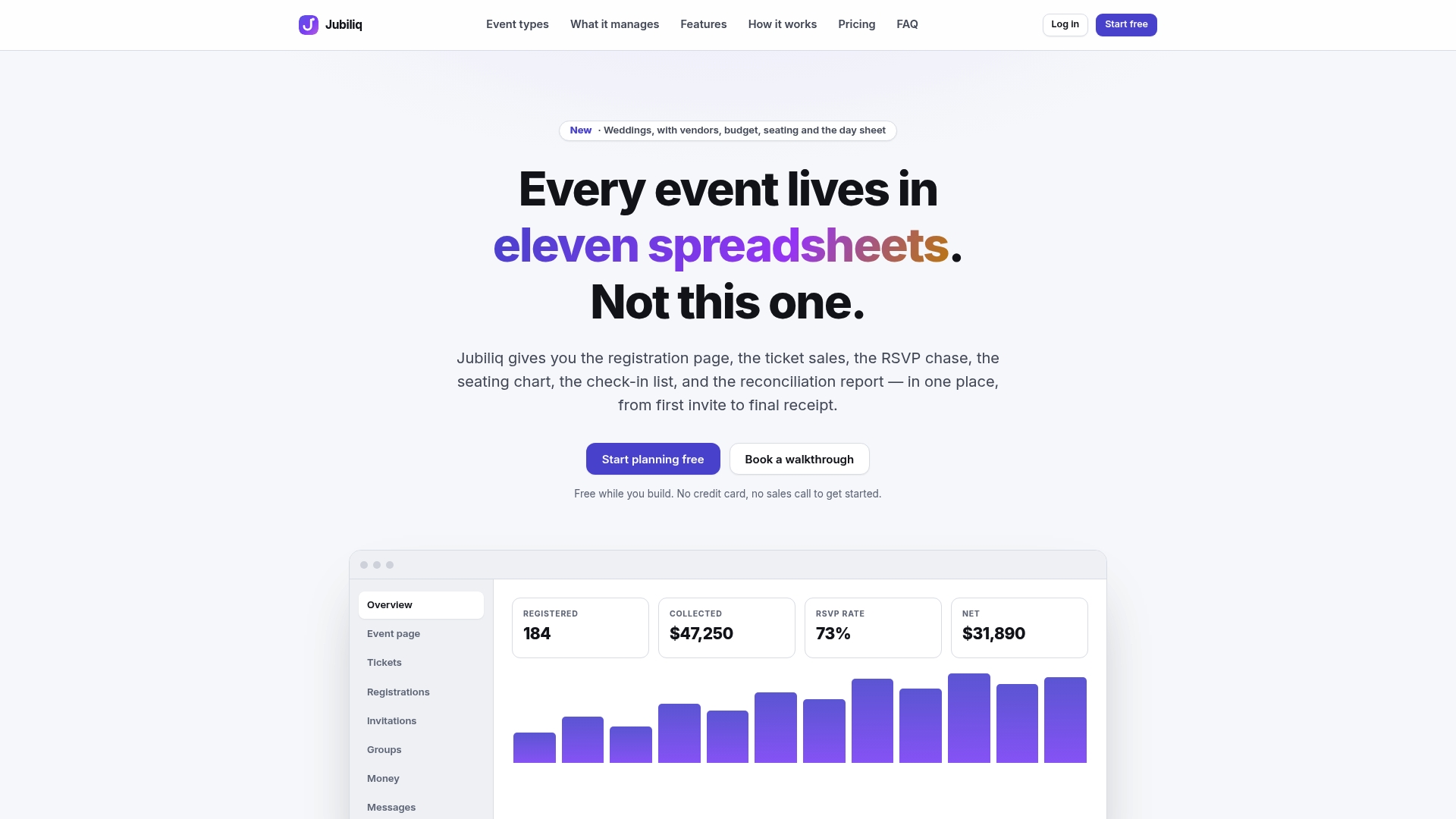
See which plan fits your event at Jubiliq.
FAQ
What are the 5 C’s of event planning?
Definitions vary across the industry, but a common version covers concept, coordination, control, culmination, and closeout, moving from initial planning through execution to post-event wrap-up. Treat it as a general framework rather than a fixed standard, since different planners and organizations phrase the five stages differently.
How do you host 40 people at your house?
Start by calculating your usable indoor and outdoor space once furniture, serving tables, and walking paths are accounted for, then set a firm RSVP cutoff so your catering and seating match the confirmed count. Plan a buffet or food-station service model rather than plated service, since it scales better in a home setting, and designate one entrance and one exit path to keep arrivals and departures from bottlenecking.
How do you feed 50 people at a party?
Collect dietary restrictions during RSVP and build a spreadsheet breaking counts down by restriction, then choose buffet or station-style service so guests can self-select based on labeled options. Keep hot and cold food out of the 40°F to 140°F danger zone with temperature logging rather than relying on a single ice bath for a long display.
How much does a party for 50 guests cost?
Cost varies widely by venue, menu, and location, so there is no single reliable figure to quote. Build your own estimate by itemizing venue, food and beverage, staffing, and rentals, then dividing food and beverage costs by your confirmed headcount to get a per-guest number specific to your event.