Event Volunteer Management: A Practical Guide for Organizers

Managing event volunteers comes down to five jobs: define the roles, work out how many people each one needs, recruit and onboard them, schedule shifts they can keep, and brief and thank them. The work is easy to underestimate because the roles that break an event are often the ones nobody wrote down. It goes best when the volunteer plan lives next to your guest list, budget and day-of timeline. In Jubiliq, task scheduling, guest tracking, budgeting and a printable day sheet sit in one place, so a volunteer shift is never a separate spreadsheet that drifts out of date.
This guide is for people running a wedding, a client event, a fundraising gala, a large party or a golf outing with a handful to a few dozen helpers.
TL;DR
- Write a role description for every job before you recruit anyone, including the invisible ones: setup, check-in, parking and teardown.
- Count heads from tasks and shifts, then recruit 10% to 15% more than you need to cover no-shows.
- Keep sign-up short, confirm quickly, and send automatic reminders so shifts get filled and kept.
- Brief everyone on the day with a one-page schedule, a named lead per station and a contact for problems.
- Thank people and ask for feedback within days; that is what brings volunteers back.
Table of Contents
- What event volunteer management involves
- Define roles before you recruit
- How many volunteers you need
- Recruit, screen and onboard
- Scheduling shifts that hold
- Assigning and preparing fundraising event volunteers
- Briefing and coordinating on the day
- Thank people and learn from the day
- Run your volunteers inside your event plan
- FAQ
- Sources
What event volunteer management involves
Volunteers are a workforce beyond your core committee. The Indianapolis Neighborhood Event Toolkit describes them as people who plug in during the final planning stages and carry out the on-the-ground work. That timing is the risk. They arrive late in the plan, know the least about it, and carry out the parts guests see.
A volunteer handbook from Estonia lists the coordinator’s tasks as strategy, recruitment, screening, training, supervision, evaluation and preventing risks. At a gala or a golf outing you will not run a full program, but the same sequence applies in miniature. Someone has to own it. A festival guide from Finland says the producer usually handles volunteers, but a separate coordinator is worth having when numbers are high. For a wedding, that person is a trusted friend who is not in the wedding party, so the couple is never the one answering questions.
Define roles before you recruit
Plan the roles first, then recruit for them. A volunteer toolkit from SWK Ghana asks for a short description of every role: its purpose, main tasks, essential versus nice-to-have skills, time and place, training and any safeguarding checks. One page per role is enough.
Two rules keep roles fair. First, volunteer tasks should support the event, not replace paid people: both the Volunteer Now events toolkit and the Finnish festival guide say so. Second, even an all-volunteer event needs a designated team leader.
The roles people forget
Everyone remembers the registration table and the food line. The jobs that get missed are setup, volunteer check-in, floaters who fill gaps, parking and teardown. Teardown is the hardest shift to fill, because by then people want to go home. Name it, assign it and tell the volunteer it exists when they sign up.
A starter list by event type:
| Event | Typical volunteer roles |
|---|---|
| Wedding | Guest greeters, gift and card table, shuttle or parking guide, cleanup crew |
| Corporate client event | Registration desk, badge pickup, wayfinding, speaker escort |
| Fundraising gala | Check-in, bid or raffle table, cashiering, item pickup, setup and cleanup |
| Golf outing | Hole marshals, registration, contest holes, scorekeeping, beverage carts |
| Large party | Door and check-in, coat check, food and drink runners, cleanup |
How many volunteers you need
Do not guess. Break the event into tasks, assign each a time window, and total the shifts. The Pennsylvania Parks & Forests planning template has you list every task, date and time, total the shifts and volunteers per shift, then add 10% for no-shows. Volunteer Now suggests recruiting 10% to 15% more than you need to allow for drop-outs.
A worked example for a golf outing with 18 holes:
- Hole marshals: 18 holes, one person each for a four-hour morning shift = 18 people.
- Registration: 3 people for the 90 minutes before tee-off.
- Beverage carts: 2 people for four hours.
- Setup and teardown crew: 4 people, split across two short shifts.
- Total: 27 positions. Adding 10% to 15% means recruiting about 30 to 32 people.
SWK Ghana adds a useful limit: recruit only as many people as you can brief, support and thank properly. More names do not help if half of them never get instructions.
Volunteer costs belong in the budget too. The Finnish guide lists insurance, catering, meetings, supplies and possible transport. A volunteer meal and a T-shirt are small lines, but they add up across thirty people, and they are easier to track when your budget tool is the same place as your task list.

Recruit, screen and onboard
Where to find people
SWK Ghana’s kit suggests advertising in community groups, universities and on social media, keeping the application form short, and selecting on skills and commitment instead of familiarity. Reply to everyone, including the people you cannot place. For a wedding or party, your pool is friends and family, so the same principle applies: ask for specific shifts, not general help.
For a gala or corporate event with an outside crowd, the City of Richmond Hill’s festival guide recommends a volunteer plan covering job descriptions, screening, interviewing, orientation, training, supervision and recognition, and meeting new volunteers to confirm a good fit before placing them.
What a good onboarding covers
The SWK Ghana checklist is a solid template. Give each volunteer:
- A welcome and a short explanation of the event’s purpose and team.
- A signed code of conduct, plus a note on how guest data is handled.
- Role-specific training and a named supervisor or buddy.
- A contact list that includes emergency procedures, and an emergency contact on file for them.
- Clear dates, times and what to bring or wear.
If your event has a guest-facing code of conduct, such as a large party or nightlife event, a copy-ready event code of conduct template gives volunteers the same rules guests are held to.
Scheduling shifts that hold
Good scheduling is mostly about making commitments visible and easy to keep. The Indianapolis toolkit recommends a sign-up site where volunteers pick times that work for them and get automatic reminders of their slots.
Some habits that make a schedule survive contact with real life:
- Short shifts. Two to four hours keeps people fresh and leaves them time to enjoy the event.
- Build in a floater or two. Someone unassigned absorbs the no-show.
- Schedule breaks. Volunteer Now recommends a rota for regular meal breaks.
- Sequence the physical work. Setup crews need access to the venue before vendors finish, so coordinate their timing with deliveries. A load-in logistics slot template shows how to stagger arrivals so your setup volunteers are not standing around or in the way.
- Plan how people arrive. At a large venue, volunteers who must be on site early need a parking or ride plan. An event transportation timeline shows what to book and when if you are shuttling a crew.
Reminders matter as much as the schedule. The same rhythm that works for guest RSVPs works for helpers: a note a week or two out, then a short one a few days before. Our guides on RSVP reminder emails and your guest communication plan lay out timing you can adapt for volunteers.
Assigning and preparing fundraising event volunteers
Fundraising galas put volunteers in front of donors, so matching person to post matters. Greater Giving’s auction guidance suggests matching strengths to assignments, so a shy volunteer is not put on guest greeting. Give each station a lead: registration, auction tables, data entry, check-out and cashiering all go better with one person who knows the answers.

Two habits help guests feel welcome. Keep volunteers visible and useful at ticket or raffle tables, and make sure they can answer common questions about rules and refunds without hunting for an organizer. A 15-minute pre-event briefing covering the rules, responsibilities and schedule is enough to prepare them.
Check-in is where this plays out first. The questions you ask at registration decide what your volunteers have to untangle at the door, so ask for dietary needs, accessibility requirements and plus-ones up front. Our guide to registration form questions covers what to collect, and the piece on VIP guest management helps you brief the door team on who needs special handling. For vendors, a vendor management guide tells you who volunteers will be handing off to and when.
Briefing and coordinating on the day
A good briefing is short and written down. Volunteer Now prescribes an on-the-day briefing and contact with volunteers throughout the event. Treat these as the minimum:
- Arrive early. Ask volunteers to come before their first shift so you can walk them through the space.
- Hand out a one-page schedule. It should show the timeline, who leads each station, where supplies are and who to call.
- Show the exits and the first-aid point. Name who calls for help if something goes wrong.
- Put supplies where the work is. Badges, cash boxes, pens, signs, water and a spare phone charger belong at the stations, not in one trunk.
- Check in mid-event. A lead walks the stations, covers breaks and moves floaters to the gaps.
- Plan for the missing person. Decide in advance who covers a gap and which task can be dropped if no one can.
A printed day sheet is the simplest tool for this. Jubiliq produces a printable day sheet from your event plan, so the schedule volunteers carry matches the one you built.
Thank people and learn from the day
Retention starts before the event ends. The Richmond Hill guide calls saying thank you vital to a successful volunteer program. A peer-reviewed study of volunteer management at large sport events found that meaningful roles, quality of experience, appreciation, relational connection and clear communication are the themes behind motivation and continued engagement.
Practical follow-through:
- Thank people in person at the end of their shift, and again in writing within a few days.
- Hold a short debrief on the day or soon after, then send a questionnaire for deeper feedback, as Volunteer Now suggests.
- Keep a note of who did well in which role, so next year you can invite them back to the job they liked.
SWK Ghana frames volunteer time as a gift, not free labor, and ends with an exit conversation about what worked and what did not. That is a good test for your own event: would a first-time volunteer want to do it again?
Why we build volunteer plans into the event plan
Volunteer problems rarely start with the volunteers. They start when the shift list is in one spreadsheet, the guest list is in another, the budget lives in a third place and the timeline is in someone’s head. Each change has to be copied across, and the copy is what gets missed.
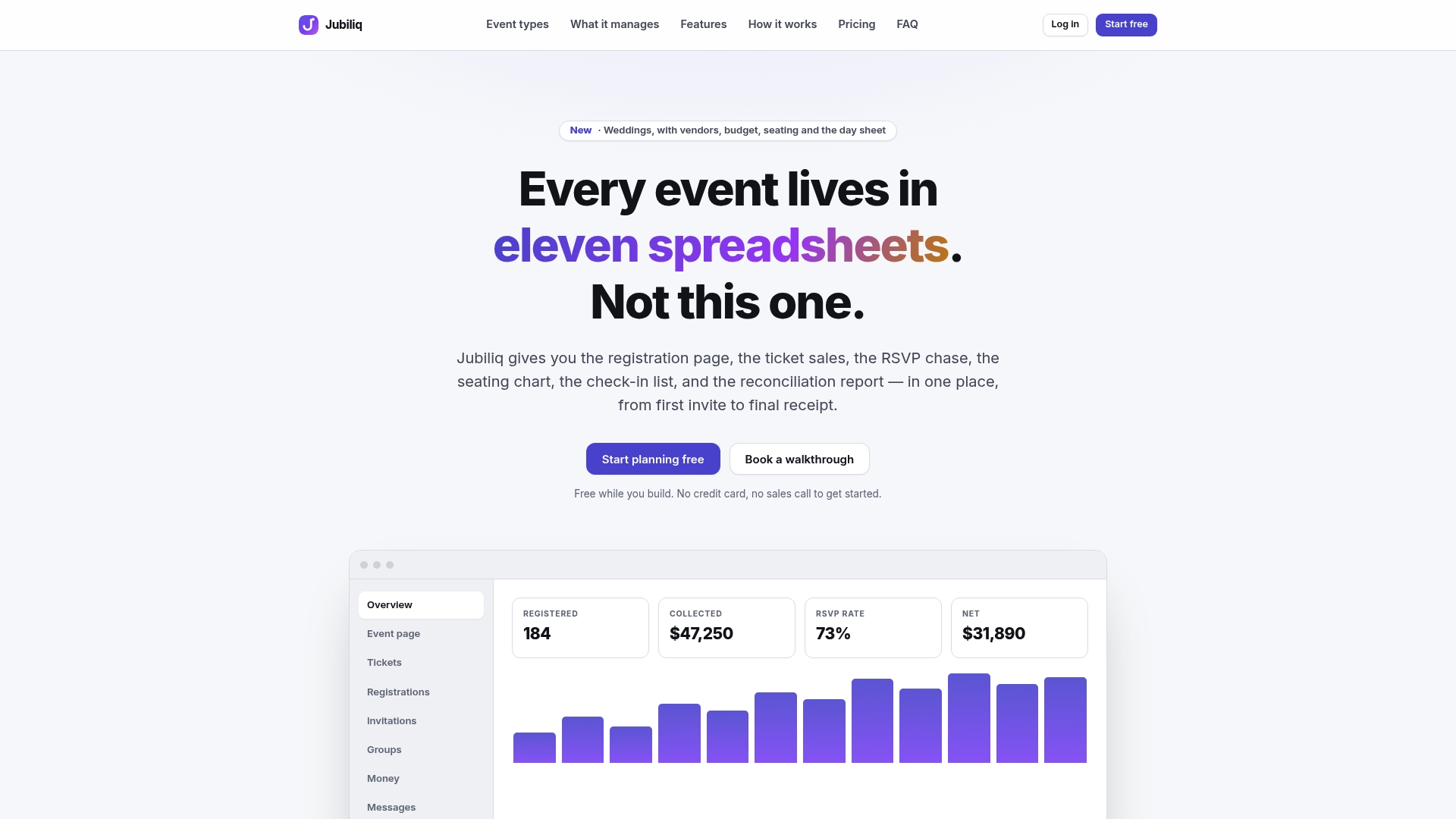
That is why we built Jubiliq as a single place from invite to day-of coordination. Our interface adapts to the type of event, so a golf outing and a wedding each show the tasks that matter and hide the ones that do not. Task scheduling, real-time progress dashboards, segment email blasts, budget tracking and a printable day sheet all draw on the same plan. When something moves, it moves everywhere.
The organizer’s real job on the day is to be available for the unexpected. Our aim is to make everything else already decided.
HCRF
Run your volunteers inside your event plan
If you are juggling volunteer shifts, guests, vendors and a budget, one workspace helps. Jubiliq’s Starter plan costs $0 per event, and planning-only events, such as weddings and parties without paid tickets, are free. If you sell tickets or sponsorships, the Organizer plan charges 2% per paid registration, plus Stripe fees. Enterprise pricing is custom for multi-event organizations. See the plans on Jubiliq.
FAQ
How many volunteers do I need for an event?
List every task and its time window, total the shifts, then add a buffer. Pennsylvania’s planning template adds 10% for no-shows, and Volunteer Now suggests 10% to 15%. Include floaters and teardown in the count.
How should I schedule event volunteers?
Use short shifts, let people choose from open slots, and send automatic reminders. Add a floater and a meal-break rota. Keep one master schedule so changes reach everyone, rather than several copies.
Who should manage volunteers at a fundraising event?
Name one volunteer lead for the whole event, plus a lead at each station such as registration, auction and cashiering. Match people to roles that suit their strengths and give each a written role description and a short briefing before doors open.
How do I keep volunteers coming back?
Give them meaningful roles, clear communication and real appreciation. Thank them at the event and afterward, then ask for feedback in a short debrief and questionnaire. Invite them back to the roles they enjoyed.
Sources
- Volunteer Coordinator Handbook (voco.ee)
- Neighborhood Event Toolkit (Indianapolis)
- A Guide to Volunteer Work (Tampere Region Festivals)
- Volunteer Management Starter Kit (SWK Ghana)
- Events Volunteering Toolkit (Volunteer Now)
- Volunteer Roles & Responsibilities Planning Template (Pennsylvania Parks & Forests)
- Community Festivals and Events Planning Guide (City of Richmond Hill)
- An Empirical Exploration of Volunteer Management Theory and Practice (PMC)