Event Vendor Management: A Practical Guide for Organizers

Event Vendor Management: A Practical Guide for Organizers
Event vendor management is the work of choosing, contracting, briefing, coordinating and reviewing every outside supplier who helps deliver your event: caterer, venue, AV crew, florist, security, rental company and more. Do it well and you get one record per vendor, one named contact on each side, a written agreement, a payment schedule you control and a minute-by-minute arrival plan for event day. This guide walks through each step in that order.
TL;DR
- Keep one record per vendor: contact, scope of work, contract terms, payment schedule, insurance and permits.
- Put scope, costs, payment timing, cancellation and liability in writing before you pay anything, and never pay 100% upfront.
- Name a single point of contact on each side, set check-in dates and agree on who escalates what.
- Send every vendor a load-in schedule with arrival time, setup location and time allowed, then walk the site beforehand.
- After the event, review each vendor and file the notes so next year’s booking starts from facts.
Table of Contents
- What vendor management covers
- What to track for every vendor
- Finding and vetting vendors that fit the budget
- The vendor agreement: what to put in writing
- Build a vendor communication plan
- Coordinate load-in and the event day
- Compliance, safety and contingencies
- Payments, changes and closeout
- Perspective: why vendor management belongs in the same place as everything else
- Plan vendors and the day in one place
- FAQ
- Sources
What vendor management covers
It starts before the first quote and ends after the last invoice is paid. One event vendor management guide describes it as selecting, coordinating, monitoring and evaluating every external supplier, and it lists venues, caterers, audiovisual suppliers, decorators, security and staffing as the usual categories.
For a wedding that might be six or seven vendors. For a fundraising gala or a golf outing it can be fifteen or more: caterer, bar, rentals, AV, photographer, auctioneer, printer, shuttle, cart or course contact, volunteers’ supply vendor and a day-of security or medical contact. The number changes, but the lifecycle is the same:
- Source and vet candidates.
- Compare itemized quotes and negotiate.
- Sign an agreement and record the terms.
- Brief the vendor and agree on communication.
- Coordinate arrival, setup and teardown.
- Pay on the contract’s schedule and review performance.
Most problems that look like “a vendor let us down” are really a gap in one of those six steps: an unwritten expectation, a missed deadline or an arrival time nobody confirmed.
What to track for every vendor
The same source names the essential details to hold for each supplier: company contact information, scope of work, contract terms, payment schedules, insurance certificates, permits and performance evaluations. Put them in one place, whether that is a spreadsheet or a planning platform, so anyone on your team can answer a vendor’s question without hunting through email.
Here is a working template:
| Field | What to record | Why it matters |
|---|---|---|
| Primary contact | Name, mobile, email, backup contact | Someone reachable on event day |
| Scope of work | Exactly what is delivered, quantities, hours | Prevents “that wasn’t included” disputes |
| Quote and final cost | Itemized lines, taxes, service charges, gratuity | Feeds your budget tracker |
| Payment schedule | Deposit, balance, due dates, trigger dates | Cash flow and leverage |
| Contract status | Sent, signed, countersigned, date | Know what is actually binding |
| Insurance and permits | Certificate on file, expiry, permit numbers | Venue and local requirements |
| Load-in details | Arrival time, dock or door, power or water needs | Feeds the day sheet |
| Cancellation terms | Notice periods, refund rules | Tells you your options if plans change |
| Performance notes | What worked, what to fix | Next event’s shortlist |
Keep the file live. A vendor record that was accurate in March and untouched since is worse than none, because people trust it.
Finding and vetting vendors that fit the budget
Start with the budget line, not the vendor. Decide what share of the total each category can take, then gather quotes that fit. Ask for recommendations from your venue, from past organizers and from people who have run similar events, and ask each candidate for references from comparable events.
When you compare, insist on itemized pricing. A single lump sum hides what you are paying for and makes it hard to trade features against cost. Our separate guide on finding, vetting and booking suppliers goes deeper on shortlists, reference calls and questions to ask.
Negotiate flexibility, not just price
According to AMW’s vendor guide, negotiation can cover price, payment terms, cancellation policies and included services. Price is only one lever. Often you gain more from a longer cancellation window, a staged payment schedule or an included extra than from a small discount.
Venues deserve a close read here. Some require you to use their in-house caterer or AV team. Trey Smith of Human Capital Media has suggested to PCMA that planners negotiate to keep the freedom to bring in preferred third-party vendors instead of simply accepting mandatory in-house agreements. Raise it before you sign the venue contract, not after.
The vendor agreement: what to put in writing
A handshake is not a plan. A formal agreement should cover the scope of work, deliverables, costs, payment schedules, cancellation and force majeure terms, insurance and liability limits, as the AMW guide lays out. Read each part with a specific question in mind:
- Scope and deliverables: What exactly arrives, in what quantity, at what time? “Full bar service” means little. “Two bartenders, four hours, house spirits and three beers” is checkable.
- Costs: Are tax, service charges, delivery, overtime and gratuity included or extra?
- Payment timing: What triggers each payment? A “net 30” clause depends on which date the clock starts from, which we unpack in vendor contract terms for events.
- Cancellation and force majeure: Who can cancel, with how much notice, and what is refunded? See our annotated contract cancellation clauses.
- Insurance and liability: Which party carries what coverage, and who is responsible for damage or injury?
Catering has its own pitfalls, from headcount guarantees to food safety duties. Our piece on catering contract duties lists five things to put in writing.
On insurance, a general explanation of general liability insurance for events can help you understand what coverage you may ask vendors, or your own team, to carry. Requirements vary by venue and state, so check the venue’s rules and talk to a licensed insurance professional before you decide what your event needs.
Fair terms keep vendors on your side
The World PCO Alliance, a professional body, argues for contracting built on clarity, proportionality and shared accountability, with risks made visible and solved together rather than handled punitively. That fits everyday practice. A vendor who understands the terms and feels they are fair will often work harder to solve a problem on the day.
Build a vendor communication plan

Most event teams have a guest communication plan and no vendor equivalent. They should. If you want to see how the guest side works, our guest communication plan article is a good companion. The vendor version needs five parts.
1. One point of contact on each side. AMW recommends designating a single contact for you and for each vendor. Two people giving different instructions to the same caterer is how a wrong delivery time gets confirmed.
2. Channels. Decide what goes where. Contracts and changes go by email so there is a record. Quick day-of questions go by text or phone. Shared documents hold anything that evolves, such as the production schedule and menu counts.
3. Check-in schedule. Set dates, for example at booking, at final headcount, one week out and the day before. Put them on your task calendar and tell vendors the dates up front.
4. Information deadlines. Vendors need things from you: final guest count, dietary needs, floor plan, run of show. Give each a due date, and tell vendors what you need back and when, such as certificates of insurance or arrival confirmations.
5. Escalation steps. Write down who decides when something goes wrong. A simple version: vendor contacts the day-of lead; if unresolved in 15 minutes, the lead calls the event owner; money decisions need the owner’s approval. Share it in the briefing so nobody improvises.
A short template you can paste into a kickoff email:
Our contact for all logistics is [name, mobile]. Please confirm arrival details by [date]. We will send final counts on [date] and ask for your insurance certificate by [date]. On event day, call [name] first; if they are unreachable for 10 minutes, call [backup].
Coordinate load-in and the event day
The research behind AMW’s guide points to a detailed load-in schedule that shows when each vendor arrives, where they set up and how long they have. Sequence vendors logically: the rental crew and AV team usually come before the florist and linens, and the caterer needs kitchen or staging space before the first plates go out. Build in buffer time, because trucks get stuck in traffic and elevators get shared.
Two habits make the biggest difference:
- A pre-event walkthrough. Walk the site with the venue contact and, where practical, your key vendors. Check dock access, parking, power, water, loading routes and where trash goes.
- A single printed day sheet. Give your day-of lead one document with every vendor’s name, mobile number, arrival window, setup spot, and what they are delivering. It saves scrolling through email while a delivery driver waits at the wrong door.
For a broader view of how the pieces connect, see this event logistics planning guide, which covers how suppliers work together on site at hospitality events.
A sample load-in block for a 6 p.m. gala:
| Time | Vendor | Task | Location |
|---|---|---|---|
| 10:00 a.m. | Rental company | Tables, chairs, linens | Ballroom |
| 12:00 p.m. | AV crew | Staging, sound check | Ballroom stage |
| 2:00 p.m. | Florist | Centerpieces, entry arrangements | Ballroom, lobby |
| 3:00 p.m. | Caterer | Kitchen setup, plating test | Service kitchen |
| 4:30 p.m. | Photographer | Venue walk, lighting check | Throughout |
| 5:00 p.m. | Registration team | Check-in desk setup | Lobby |
Your times will differ, but the format holds for a wedding, a corporate dinner or a golf outing: who, what, when, where.
Compliance, safety and contingencies
Check the basics for each vendor before the day: insurance certificates on file, permits where a food, alcohol, amplified sound or street use applies, and the venue’s own vendor rules. Requirements depend on your city, county and venue, so ask your venue manager and local licensing office what applies instead of assuming one set of rules.
Two wider points belong in the plan:
- Sustainability across the supply chain. ISO 20121 is an international framework for managing the economic, social and environmental sustainability of events, and the standard’s own publication says it applies to organizers and the whole supply chain. If you work in corporate events, our phase-based corporate event checklist shows where it fits.
- Data handling. If a vendor touches guest or attendee data, such as a registration partner or a mailing house, ask how they protect it. PCMA has reported that roughly two-thirds of data breaches arise from weaknesses in third-party vendor systems, which is why due diligence on suppliers matters.
Finally, plan for failure. For each critical vendor (caterer, AV, transport), note a backup and what you would do in the first hour if they did not show. You may never use it, and that is the point.
Payments, changes and closeout
Follow the payment terms in the contract, and avoid paying 100% upfront. A staged schedule, with a deposit to secure the date and the balance tied to delivery, keeps both sides motivated. Log every payment against the vendor record and your budget, and keep changes in writing: if the headcount, hours or menu changes, get an updated quote or an email confirmation before the day.
After the event, review each vendor while memories are fresh. The post-event discussion should cover what worked and what could improve, and the performance notes should be documented for future reference, as both the AMW and Event Study guides advise. A five-minute call or form per vendor is enough:
- Were they on time and set up as agreed?
- Did the final invoice match the contract?
- How did they handle problems?
- Would you book them again, and what would you change?
Your attendees and team can also tell you things vendors cannot. Our post-event survey questions article shows how to turn answers into actions you can assign to a vendor.
Perspective: why vendor management belongs in the same place as everything else
We built Jubiliq on a simple observation: vendor problems rarely start with the vendor. They start when a contract lives in one inbox, the payment dates live in a spreadsheet, the headcount lives in someone’s head and the arrival times live in a text thread.
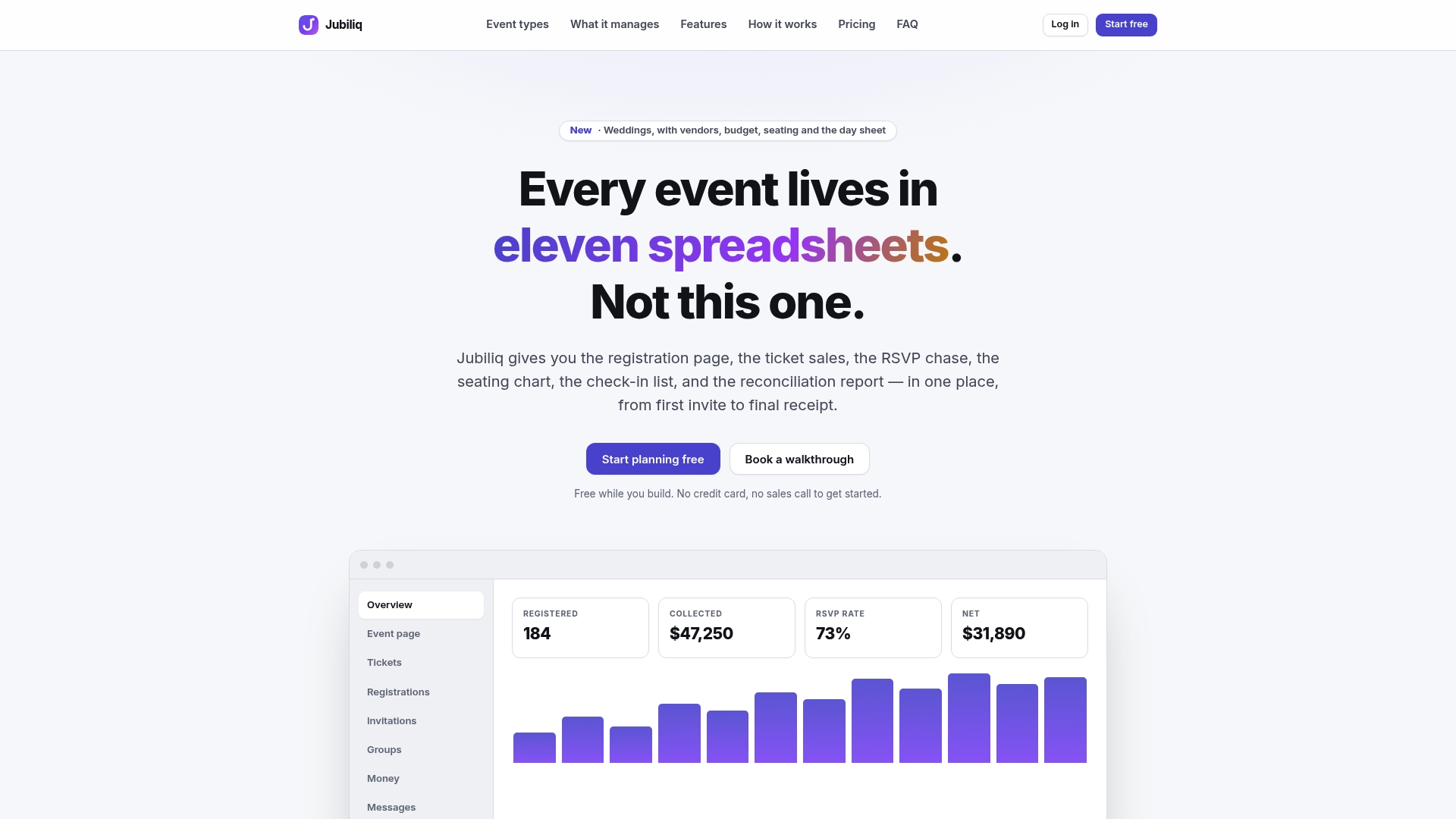
That is why we put vendor and contract management next to the budget, the task schedule, the guest list and the day sheet in a single workspace. When a caterer’s deposit is due, it shows up in your financial tracking. When the final headcount locks, the people who need it can see it. When the event arrives, the printable day sheet carries your vendor details instead of you reconstructing them.
We also believe the interface should fit the event. A bride on a budget, a nonprofit running a gala and a team hosting a client dinner do not need the same screens. Our adaptive planning interface is designed to hide what does not apply and bring forward what does, so a vendor list for a backyard wedding is not buried under sponsorship tools it will never use.
Our advice is to keep the vendor record, the money and the schedule together, and to review them together after the event. That is how the second event gets easier than the first.
HCRF
Plan vendors and the day in one place
If you are ready to stop juggling documents, Jubiliq lets you manage vendors and contracts, track your budget, schedule tasks and print a day sheet alongside your guest list and RSVPs. Planning-only events, including weddings and private parties, can be run on the Starter plan at $0 per event. If you sell tickets or take paid registrations, the Organizer plan charges 2% per paid registration, with Stripe processing fees applying on top. Organizations running many events can ask about Enterprise, which has no published price.
See the plans and start your first event on the Jubiliq site.
FAQ
What is a typical vendor fee for an event?
There is no single figure, because fees depend on the vendor type, your city, the date, the guest count and what is included. Ask each vendor for an itemized quote that separates base price, delivery, taxes, service charges and gratuity, then compare three quotes line by line. Fees can also mean what vendors pay you, such as booth fees at a market, which you set based on your costs and space.
How do I get vendors for an event?
Start with your venue’s preferred list, recommendations from other organizers and references from similar events. Request itemized quotes from at least three candidates per category, check insurance and any permits, and confirm availability for your date. Our guide to sourcing and booking suppliers covers the process in detail.
What should a vendor communication plan include?
It should name one point of contact on each side, set the channels for contracts versus quick questions, list check-in dates and information deadlines, and spell out escalation steps for event day. Share it in a kickoff email so every vendor receives the same instructions. Keep evolving details, such as the production schedule, in a shared document.
Should I pay vendors in full upfront?
No. Follow the payment schedule in the contract, usually a deposit to hold the date and the balance closer to or after delivery. Tying payments to clear trigger dates protects your budget and gives you leverage if something goes wrong. Always record each payment against the vendor’s file.
Sources
- What Is Event Vendor Management? A Beginner’s Guide, Event Study
- How to Manage Event Vendors, AMW
- How Event Strategists Cut F&B and AV Costs, PCMA
- World PCO Alliance White Paper
- ISO 20121 publication, ISO
- Cyber Security Is Now a Bigger Threat, PCMA