Protect Event Budgets With 5 Annotated Contract Cancellation Clauses

Protect Event Budgets With 5 Annotated Contract Cancellation Clauses
A cancellation clause is the section of a contract that spells out how and when either side can walk away before the deal is finished, and what that exit costs. Whoever holds the cancellation right usually owes or receives money the moment they use it. Before you sign, cancel, or respond to a cancellation notice, read the notice and payment terms first: they decide everything else.
TL;DR:
- Cancellation clauses often specify tiered fees and nonrecoverable costs, especially for event contracts where vendors hold booked dates and incur sunk expenses.
- Properly drafted notices must follow strict procedures, including written delivery and proof of receipt, to avoid disputes and invalid cancellations.
- A cure period of around 10 days is standard in default cancellations and is crucial to prevent legal challenges later.
- Different cancellation types, such as unilateral, mutual, or force majeure, carry distinct notice and payment terms, making the label less important than the underlying financial and procedural obligations.
- Negotiating clauses should include clear notice periods, a fair fee scale, and balanced cancellation rights to protect both parties’ interests.
Table of Contents
- What a cancellation clause is and how it differs from termination or expiration
- Common types of cancellation and termination clauses
- Key elements a practical cancellation clause should include
- Annotated sample clauses you can adapt
- How to lawfully cancel a contract: a step-by-step approach
- Drafting checklist and negotiation tips for cancellation clauses
- Why cancellation clauses matter even more for event contracts
- Read the consequences, not the label
- An operational way to manage cancellation risk around your event
- Sources
- FAQ
What a cancellation clause is and how it differs from termination or expiration
The three words get used loosely, but they describe different moments in a contract’s life. Cancellation typically ends a deal before performance is complete or sometimes before it even begins, often triggered by a change of plans, a default, or an outside event. Termination ends an active contract mid-performance, usually for cause or for convenience. Expiration is neither: the contract simply runs out because its term ended, with no penalty attached to either side.
Practitioners increasingly argue the label matters less than what happens next. What gets paid, what gets refunded, who absorbs sunk costs, and what obligations survive the split are the real questions, regardless of which word the drafter chose.
You will find cancellation language in several recurring places:
- Statements of work, where scope changes or delays trigger an exit
- Event contracts, covering weddings, galas, and corporate functions
- Subscription and service agreements, where either party can walk away with notice
- Vendor and supply contracts, where default or nonperformance is the trigger
Reading a clause for its financial and procedural consequences, rather than its heading, is the fastest way to understand your actual exposure.
Common types of cancellation and termination clauses
Most cancellation language falls into a handful of recognizable patterns. Knowing which one you are looking at tells you what leverage you have and what you owe.
- Unilateral cancellation: one party can cancel without the other’s consent, often within a defined window, but this right is frequently limited by notice periods or forfeiture of a deposit.
- Mutual cancellation: both parties agree to end the contract, typically with negotiated terms on refunds and remaining obligations.
- Termination for cause or default: one party can end the contract when the other breaches, but formal procurement and commercial practice generally requires a cure notice giving the defaulting party a specific window, often ten days, to fix the problem before termination becomes valid.
- Termination for convenience: a party can exit without alleging fault, generally in exchange for a settlement covering the other side’s costs incurred to date.
- Force majeure or hardship: an outside event, such as a natural disaster or government order, excuses or delays performance and can eventually justify cancellation if the disruption continues.
Each type carries a different notice requirement and a different financial outcome, which is why the label alone never tells the full story.
Key elements a practical cancellation clause should include
A cancellation clause only works if it answers concrete questions in advance: who can cancel, how, by when, and at what cost. Vague language is where disputes start.
A workable clause spells out:
- Trigger language: exactly who can cancel and under what circumstances, stated in plain terms rather than broad discretion
- Notice mechanics: how notice must be delivered, what it must contain, and when it takes effect
- Cure or show-cause periods: how long the other party has to fix a default before cancellation becomes final, and what happens if they fail to
- Payment rules: how deposits are treated, whether fees scale with how close cancellation falls to the event or delivery date, and how nonrecoverable costs get reimbursed
- Third-party and survival provisions: what happens to subcontractors or vendors, which obligations (confidentiality, indemnification) continue after cancellation, and whether either side must mitigate losses
Notice mechanics deserve extra attention because they are where cancellations most often fail procedurally. Formal acquisition rules require termination notices to be in writing, follow prescribed formats, and go out in a way that lets both sides confirm receipt, such as certified mail or a documented electronic delivery, and they set out matching settlement procedures for what happens after termination. A cancellation delivered by text message or a verbal call, even if well-intentioned, can leave a party unable to prove it happened at all.
Payment rules are the second flashpoint. A clause that only says “a cancellation fee may apply” invites argument. A clause that says a deposit is forfeited outside 90 days, half is due between 60 and 90 days, and the full balance is due inside 30 days gives both sides a number to plan around.

Pro Tip: Before signing anything, find the words “cancel,” “terminate,” and “notice” in the document and read every sentence around them twice, that is where your actual risk lives.
Annotated sample clauses you can adapt
These five templates cover the situations that come up most often. None of them is a substitute for a lawyer’s review on a high-value or unusual contract, but each shows the structure a workable clause needs.
Template A, cancellation before performance begins: This works when nothing has been delivered yet. The deposit compensates the provider for reserving the date or capacity; everything else goes back.
Template B, cancellation after work starts: Once labor, materials, or bookings are underway, the fair split shifts from “keep the deposit” to “pay for what was actually done.”
Template C, cure notice and default termination: The ten-day window mirrors the cure period built into formal federal procurement practice, and skipping that notice step is one of the fastest ways a termination gets challenged later.
Template D, termination for convenience: No fault is alleged here. The tradeoff for a no-questions-asked exit is a fair settlement for work already done, which is exactly what Part 49 termination procedures require in federal contracts.
Template E, force majeure and hardship: The 120-day marker echoes the guideline in the ICC’s model force majeure and hardship clauses, which also require notice and a mitigation effort before either party can walk away.

How to lawfully cancel a contract: a step-by-step approach
Canceling correctly is mostly a matter of sequence: read first, document constantly, and send notice the right way.
- Reread the clause before doing anything else, noting the exact notice period, required delivery method, and any cure window that applies to you.
- Draft a notice that states the facts plainly: the contract date, the section you are invoking, the effective date of cancellation, and what you expect to happen next (refund, final invoice, or handoff of materials).
- Send it in a way you can prove, such as certified mail or an email with read confirmation, mirroring the confirmation-of-receipt standard used in formal contract terminations.
- If you are canceling for cause, document every cure attempt, including dates, communications, and any invoices for costs the failure caused you.
- Decide early whether a settlement offer is fair or whether you need to preserve your right to dispute the amount, since accepting payment can sometimes be read as accepting the terms.
A cure notice giving the other party roughly 10 days to fix a default is a standard benchmark in procurement and commercial practice, and skipping that window is one of the most common reasons a termination gets challenged later. Keep every invoice, email, and delivery receipt from the moment you suspect cancellation is coming.
Drafting checklist and negotiation tips for cancellation clauses
If you are negotiating rather than just signing, a handful of additions do most of the protective work.
Push for:
- A defined notice period and delivery method, not “reasonable notice”
- A cure period for any default before termination becomes final
- Tiered cancellation fees tied to how close cancellation falls to performance, rather than a flat penalty
- Explicit reimbursement language for vendor or subcontractor costs that cannot be recovered
Common compromise positions include a cap on total cancellation liability, a sliding fee scale instead of an all-or-nothing forfeiture, and a postponement window that lets a client move a date instead of canceling outright. Watch for clauses that let one side cancel “at any time for any reason” with no notice or payment obligation attached: that is a red flag, and a fair substitute reads “either party may cancel with [30] days’ written notice and payment for work performed to date.”
Pro Tip: If a clause only benefits one side, propose adding a mirrored right for the other party, most counterparties will negotiate rather than defend an obviously one-sided term.
Why cancellation clauses matter even more for event contracts
Event contracts concentrate the risk that generic contract clauses only hint at. A venue, caterer, or photographer often turns down other bookings the moment they hold your date, so deposits and tiered fees exist to cover that lost opportunity, not just paperwork. Vendor nonrecoverable costs, such as ordered flowers or printed materials, are why reimbursement language matters more here than in most service contracts, and a postponement window can save both sides from a full cancellation fee when the date, not the deal, is the problem.
A practical checklist for organizers includes a tiered fee schedule, a defined list of nonrecoverable vendor costs, a postponement option, and a clear notice method for every vendor involved, not just the venue.
Read the consequences, not the label
The word on the clause matters less than what it actually costs you. A “termination” clause with generous cure periods can be safer than a “cancellation” clause with none. Tailor every clause to your transaction and your jurisdiction, and get a lawyer to review anything with real money or a long timeline attached.
— HCRF
An operational way to manage cancellation risk around your event
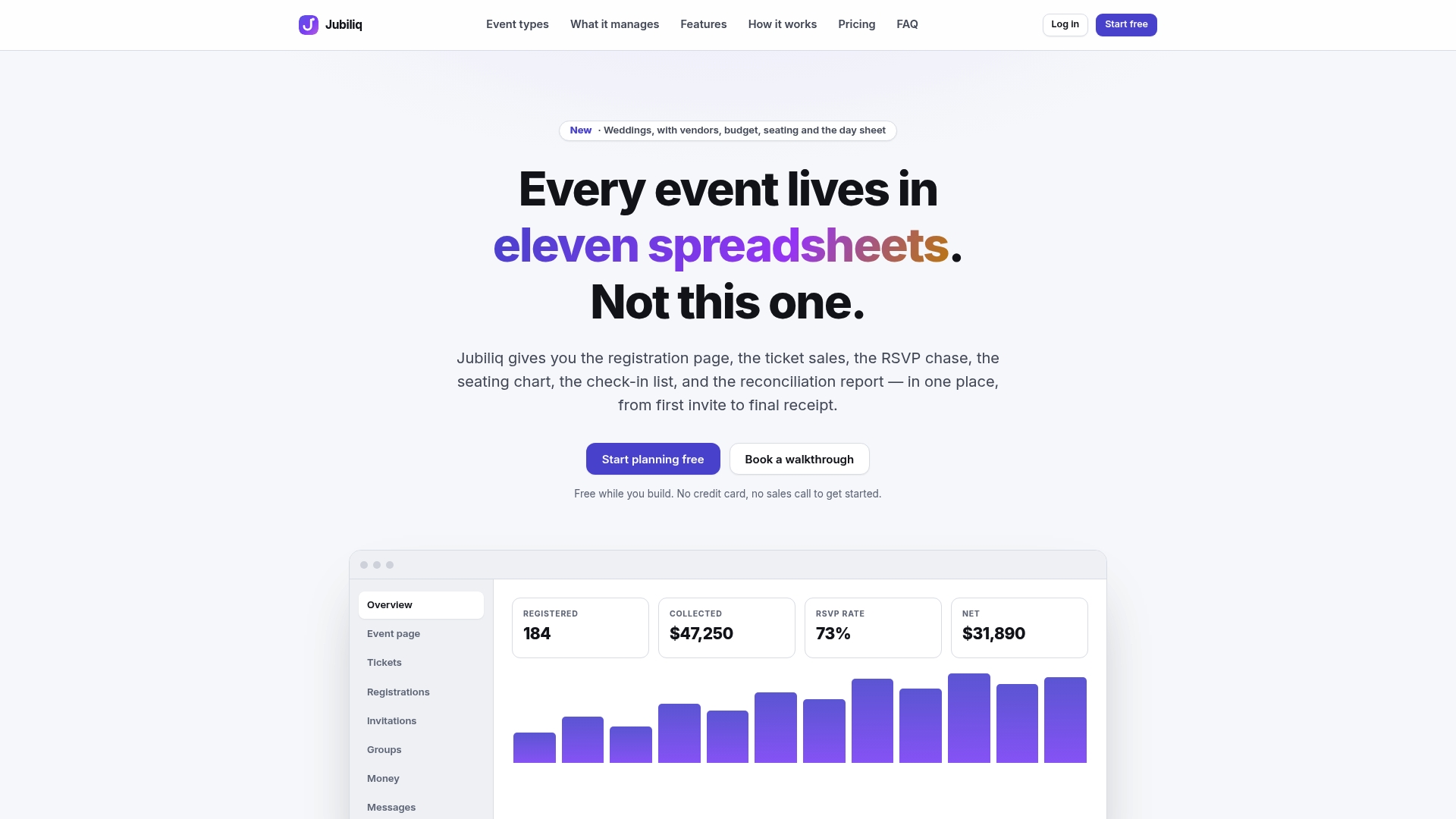
Legal clauses tell you what you’re owed. They don’t track who you owe it to, or when. The platform keeps vendor contracts, deposit schedules, and payment timelines in one place, so if a cancellation clause gets triggered, you already know which vendors are owed what and by when, backed by a printable day sheet and real-time budget tracking. See how it fits your event on the Jubiliq plans page.
This article is general information, not a substitute for advice from a qualified lawyer. Consult a qualified legal professional about your own circumstances before acting on anything here.
Sources
FAQ
Can you give an example of a cancellation clause in a contract?
A common example reads: cancellation before work begins forfeits the deposit, cancellation after work starts requires payment for work completed plus nonrecoverable vendor costs. Templates like this appear throughout event and service contracts, with the specific dollar amounts or percentages filled in for the deal at hand.
What are the main ways a contract can be terminated?
Contracts commonly end through mutual agreement, unilateral cancellation under a defined right, termination for cause or default following a cure period, termination for convenience with a settlement, or a force majeure event that makes performance impossible. Expiration of the contract term, with no cancellation involved, is a sixth, unrelated way a contract simply ends.
How do you legally cancel a contract?
Reread the cancellation clause for the required notice period and delivery method, then send written notice that states the contract, the section invoked, and the effective date, using a method you can prove was received, such as certified mail. If you are canceling for the other party’s default, document your cure notice and any attempts to fix the problem, since a cure notice is generally required before a termination for default is treated as valid.
What is typical wording for a contract termination clause?
A typical termination-for-convenience clause reads something like: “Either party may terminate this agreement for convenience upon written notice, with payment due for all work performed through the effective date.” A termination-for-default clause typically adds a cure period, often modeled on the 10-day window used in federal procurement practice, before the termination becomes final.