Event Planning Mistakes and How to Avoid Them

Most event problems start weeks before the event, in a spreadsheet, an email thread or a verbal promise from a vendor. The mistakes that hurt most are rarely dramatic: no written goal, a budget with no cushion, a contract that never says who brings the ice, a headcount built on hope. They share one root cause. Information lives in too many places, so nobody sees the gap until it is expensive. The fix is a single plan that holds the guest list, budget, vendors, tasks and day-of schedule together, which is how we built Jubiliq and why the advice below is organized around it.
TL;DR
- Write down what the event must achieve and a budget with line items plus a 10 to 15% buffer before you book anything.
- Put every vendor promise in the contract, down to the small items, and track the contracts next to the budget.
- Plan the guest count from the start and keep RSVPs, seating and catering numbers in sync.
- Build a plan B for weather, tech and no-shows, and print a day sheet everyone can work from.
- Weddings, parties and planning-only events are free on Jubiliq. Paid events cost 2% plus Stripe fees per paid registration.
Table of Contents
- Mistake 1: Planning without a goal
- Mistake 2: A budget with no line items and no buffer
- Mistake 3: Starting too late
- Mistake 4: Choosing and managing vendors loosely
- Mistake 5: Guessing the guest count
- Mistake 6: No plan B
- Mistake 7: Day-of coordination that lives in someone’s head
- Costly mistakes by event type
- Where Jubiliq fits
- FAQ
- Sources
Mistake 1: Planning without a goal
It sounds too obvious to be a mistake, yet it sits at the top of almost every list. If you cannot say what the event is for, you cannot decide whether a $4,000 venue upgrade is worth it.
The University of Oxford’s event toolkit recommends at least one SMART objective in each of four areas: audience, key messaging and content, guest experience, and follow-up. SMART simply means specific, measurable, achievable, relevant and time-bound. It also advises judging success against those objectives at an evaluation meeting within a week or two of the event, while memories are fresh.
Translate that to your event:
- Fundraising gala: a dollar target, a number of tables sold and a number of first-time donors.
- Client event: attendees from named accounts, meetings booked afterward, a feedback score.
- Wedding: a guest count you can afford, a schedule that leaves time for photos, and the two or three moments that matter most to you both.
- Golf outing: foursomes registered, sponsorship dollars and a pace of play that finishes before dinner.
A goal is only useful if the tools reflect it. In Jubiliq the planning interface adapts to the type of event you choose, so a golf outing surfaces registration and sponsorship tools while a wedding hides them. You start with the options that serve your goal rather than a menu built for every event at once.
Mistake 2: A budget with no line items and no buffer
The second classic mistake is a single number in someone’s head. A usable budget has a line for each category, and a cushion for what you did not predict.
New Zealand’s Queenstown Lakes District Council, in its event planning guide for venue users, recommends line items for venue, catering, entertainment, marketing, staff and miscellaneous costs. It also advises adding a buffer of about 10 to 15% for unexpected costs. The principle holds in any country.
The costs that blow budgets are usually the ones nobody listed: service charges, extra cleaning, permits, insurance, rental delivery, overtime for a vendor when the program runs long. If you are planning a client event, our 12-category corporate event budget shows how to break a budget down so nothing hides in “miscellaneous.”
How to keep the budget honest
- List every category before you collect quotes, so each quote has a place to land.
- Record the estimate, the contracted amount and what you have paid in separate columns. The gap between estimate and contract is where surprises show up first.
- Set the buffer on day one and treat it as spent only when you decide to spend it.
- Review the totals weekly in the final month.
Jubiliq’s budgeting tools track estimates, contracts and payments in one view with real-time updates, and the data exports to CSV when your accountant needs it. For a bride on a budget, that means every deposit and balance is visible without a separate spreadsheet.
Mistake 3: Starting too late
Time is the cheapest resource you will ever have and the one organizers burn first. Late starts shrink your venue options, put you in a weaker negotiating position and compress every decision that follows. Popular venues and caterers fill up long before the date, and last-minute bookings tend to be pricier and more limited in choice.
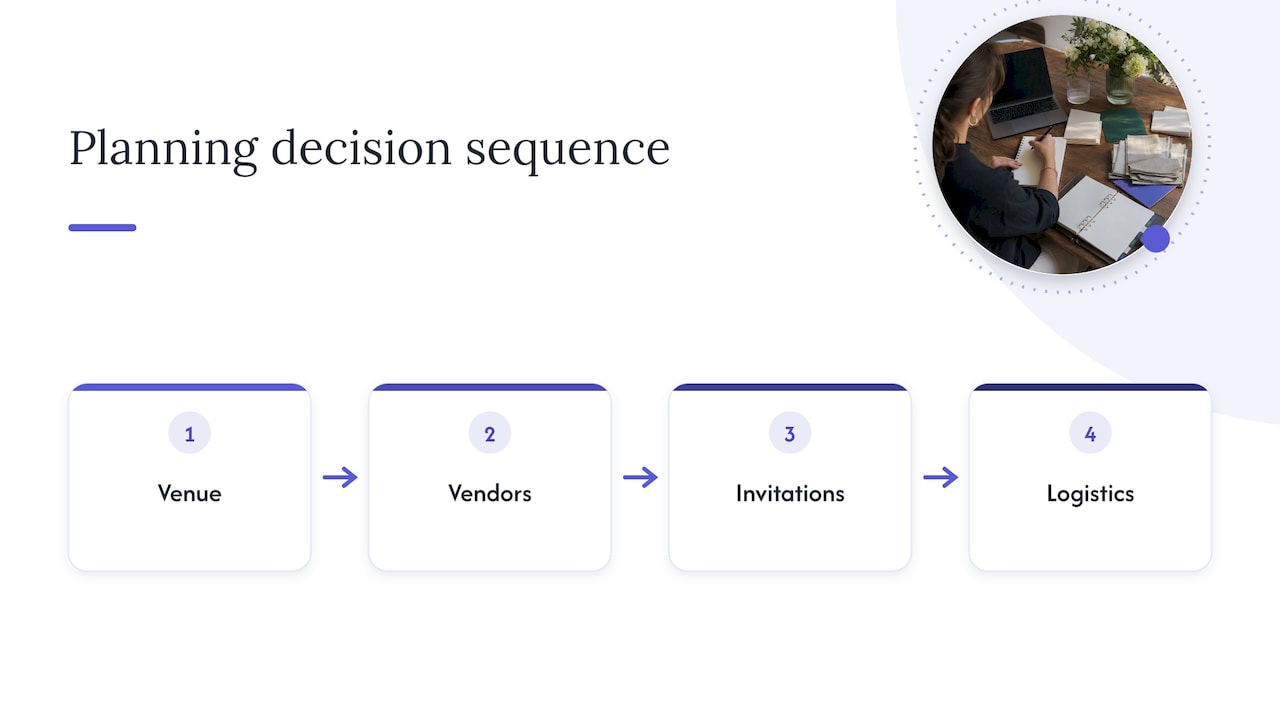
A practical way to avoid it is to work backward from the event date and assign each major decision a deadline: venue first, then date-dependent vendors such as caterer and entertainment, then invitations, then logistics. Task scheduling in Jubiliq lets you assign each of those to a person with a due date, so a co-organizer, a committee member or a planning partner can see what is open without asking.
If you are hosting a big family gathering, our guide to large party planning from three months out covers how to keep food safe and the space accessible for everyone, two things that are far easier to arrange early.
Mistake 4: Choosing and managing vendors loosely
Vendors make or break an event, and most vendor failures are failures of specificity.
BizBash collected lessons from eight event professionals, and two stand out. At a Minneapolis baseball event, an unvetted local firework vendor added loud shells despite repeated instructions. At a 1,000-guest dining event in Florida, the contract never specified who would supply the ice, and the ice bins never arrived. The planner’s takeaway was to write even trivial items into every contract.
Those are different mistakes with the same cure: vet the supplier, then put the scope in writing.
What a vendor file should hold
- Who the vendor is, their contact, and a backup contact for event day.
- Exactly what is included, including equipment, setup, breakdown and anything you might assume.
- Payment terms and the date each payment is due. Net 30 depends on the trigger date, and that detail is easy to miss.
- Cancellation and change terms.
- Arrival and load-in times.
Our guides walk through each stage: finding, vetting and booking suppliers, managing vendors once they are booked, and the five catering duties to put in writing.
Jubiliq includes vendor and contract management, so each contract sits beside the budget line it affects and the tasks that depend on it. When a payment is due or a deliverable is outstanding, you see it in the same place you track everything else, not in a buried email.
Mistake 5: Guessing the guest count
A headcount is not one number. It drives the venue size, the catering order, the seating chart, the rentals and the invitation list. When the number is wrong, every one of those is wrong.
The Knot’s wedding-mistakes list gives a blunt example: do not invite 400 people assuming only 250 will accept. Its advice is to analyze the guest list from the start and plan around an 80% yes rate. Fire codes limit maximum occupancy, and venues often cannot simply add tables if more people say yes than you expected.
The same logic applies to a gala or a client dinner. Decide your capacity first, then size the invitation list to it. For food, our catering headcount guide explains how to turn RSVPs into a number a caterer can use, and our event menu planning guide covers the choices that follow.
Keep communication in sync
A second guest mistake is inconsistent messaging: one list for invitations, another for reminders, a third for dietary notes. Our guest communication plan shows how to keep RSVPs aligned with what guests are told. In Jubiliq, RSVP tracking sits with the guest list, and segment email blasts let you write to only the people who need a message, such as sponsors, the wedding party or guests who have not replied. Seating and catering workflows draw on the same list, so a change in one place carries through.
Mistake 6: No plan B
Every experienced planner has a story, and nearly every story ends the same way: the people who recovered had a backup.
BizBash’s collection of event professional horror stories includes an NHL All-Star anthem singer who missed a flight to Boston. The lesson: book a backup singer and have him bring a tuxedo. It also describes planners who, facing Hurricane Ian during a 400-attendee event, housed the group overnight so the program could run before landfall. Another planner learned never to allow an act to run its own audio setup, after an on-stage system update destroyed a performer’s rehearsal files.
Smart Meetings, in its piece When Good Meetings Go Bad, gives practical pre-planning advice:
- Keep one or two backup venues, with the general manager’s number handy.
- Use online ticketing so you can message attendees in real time.
- Stay in contact with keynote speakers right up to event day, and tell attendees if a speaker changes.
- Involve your AV partner early, rehearse, and keep hardware and software backups such as a spare USB drive and presentations saved in two places.
A short plan B checklist
- Weather: an indoor option or a tent, with the cost in your buffer. This matters for outdoor weddings, golf outings and activations.
- People: a backup for any single person the program cannot run without.
- Tech: a tested spare for anything that has a power cord, and a run-through before doors.
- Timing: buffer between segments and one person who owns the clock.
- Communication: a way to reach every registered guest quickly. With Jubiliq’s email blasts to registrants, a venue change or delay can go out to the right segment.
Mistake 7: Day-of coordination that lives in someone’s head
The event itself is the worst moment to discover that only one person knows the load-in time. A printable day sheet fixes this: a single page with the schedule, contacts, vendor arrival times and responsibilities, handed to every lead and the venue contact.
Jubiliq generates a printable day sheet from the plan you have already built, so the schedule, vendors and tasks you entered during planning become the document your team carries on the day. Real-time progress dashboards also show what is done and what is still open in the final week, when it matters most.
Costly mistakes by event type
The same errors show up everywhere, but each type has its own favorite.
| Event | Costliest mistake | Better move |
|---|---|---|
| Budget wedding | Inviting more people than the budget and venue allow | Set the guest cap first and plan on the 80% yes rate from The Knot’s advice |
| Corporate client event | No measurable goal, so success cannot be shown | Set objectives, then build a category budget with a buffer |
| Fundraising gala | Ticket, sponsor and donation figures scattered across tools | Keep ticketing, sponsorships and donations in one place |
| Large party | Food and accessibility decided late | Plan the menu and the space months ahead |
| Golf outing | No weather plan and unclear sponsor deliverables | Define sponsor benefits in writing and set a rain plan |
For wedding and party hosts, the guest list and budget are the two places to concentrate. For galas and golf outings, the sales side matters just as much, which is why Jubiliq handles ticket and sponsorship sales and donation handling alongside planning.
Where Jubiliq fits
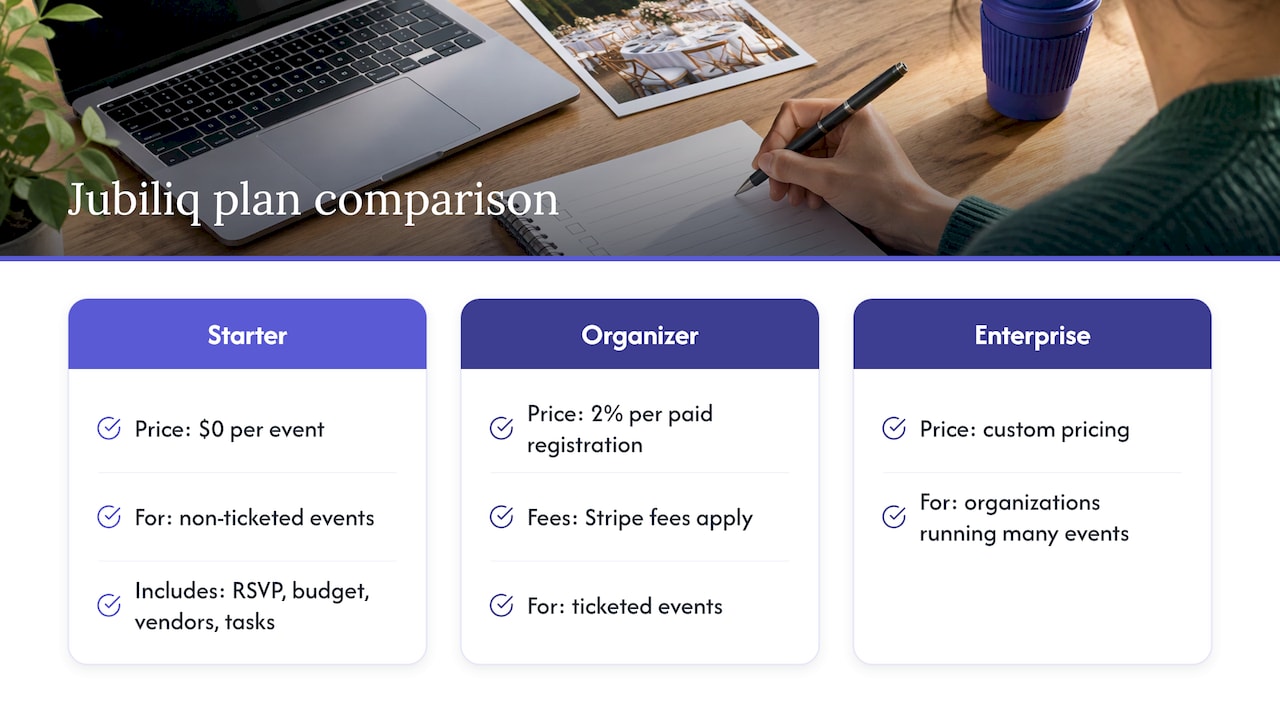
If your event is a wedding, a party or anything that does not sell tickets, planning on Jubiliq is free: the Starter plan is $0 per event. You get the guest list with RSVP tracking, budgeting, vendors and contracts, tasks and a printable day sheet, with the option to publish an event website or use planning-only mode.
If you sell tickets, registrations or sponsorships, the Organizer plan charges 2% per paid registration plus Stripe fees, so cost scales with what you actually sell. Organizations running many events can ask about the Enterprise plan, which has custom pricing.
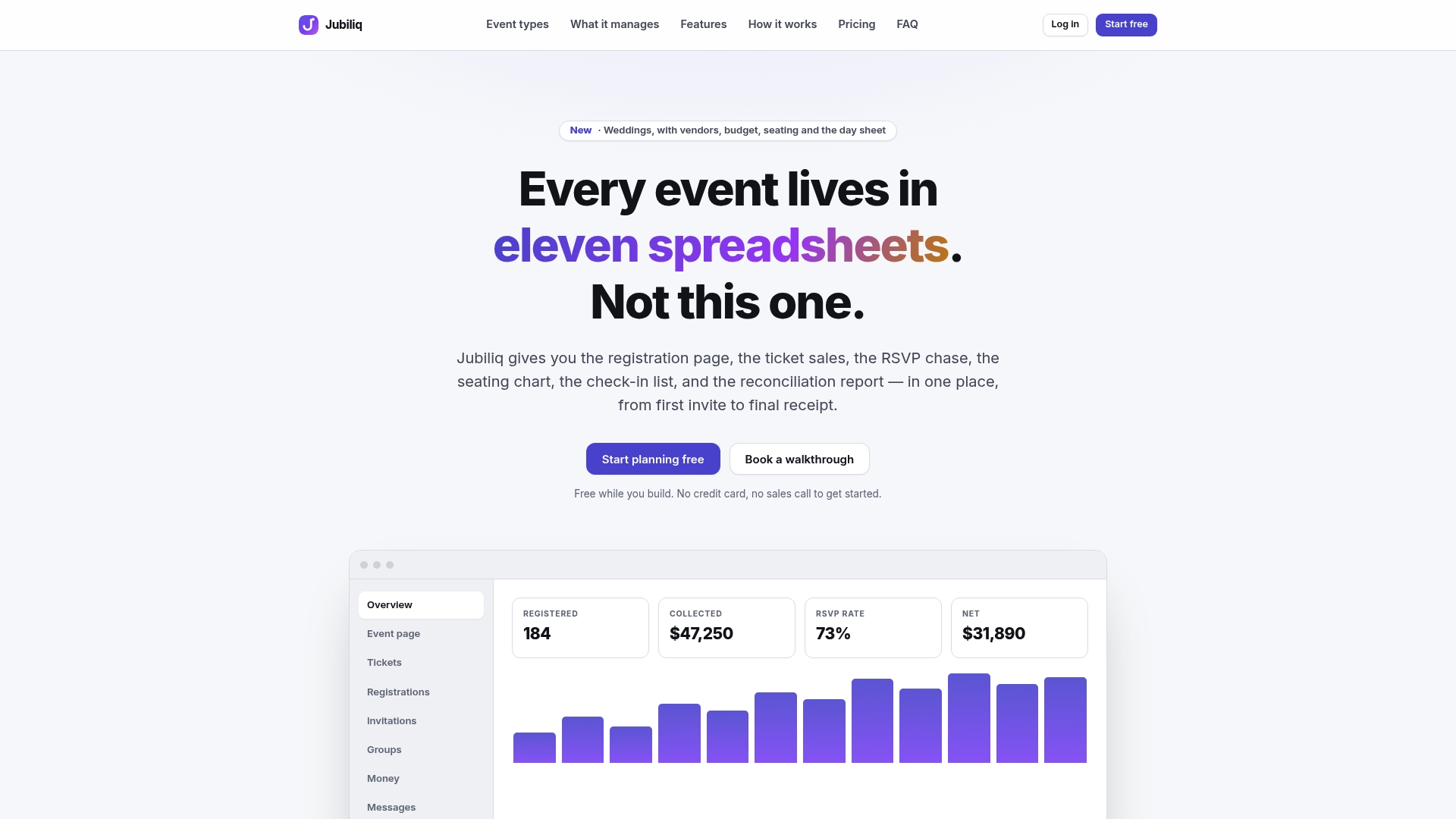
You can see the plans and start your first event at jubiliq.com.
Our view: one plan beats five tools
Every mistake in this article is a gap between two pieces of information. The budget says one thing and the contract says another. The RSVP list says 180 and the caterer was told 200. The schedule exists, but not on the page the florist is holding.
We built Jubiliq because we believe the fix is structural, not heroic. When the guest list, budget, vendors, tasks and day sheet live in one place, the gaps close by themselves. A change to the headcount shows up where seating and catering are planned. A contract appears next to the budget line it affects.
We also believe the planning screen should fit the event. A bride does not need ticket sales and a gala team does not need a honeymoon checklist, so our interface adapts to the event type and hides what is irrelevant. That keeps first-time organizers from drowning in options and lets professional planners move faster.
And we believe planning tools should not charge for events that do not sell anything. That is why weddings, parties and planning-only events are free, and why we take 2% of paid registrations only when an event sells tickets.
HCRF
FAQ
What are the most common event planning problems?
The most common ones are unclear goals, budgets without a buffer, late venue and vendor decisions, inaccurate headcounts and no backup plan. Most of them trace back to details that were assumed rather than written down. A single shared plan makes those assumptions visible early.
How much buffer should an event budget include?
The Queenstown Lakes District Council guide recommends a buffer of about 10 to 15% on top of your line items. Set it at the start and track it as its own line so you can see when it is being used.
How far ahead should I start planning?
Start as soon as you know the date and a rough guest count, because venue and key vendors are the first things to disappear. Large or formal events generally need more lead time than a casual party. Work backward from the date and give each major decision a deadline.
How do I avoid vendor problems?
Vet each supplier before you book, then write the full scope into the contract, including small items such as equipment and who supplies it. Record payment dates and cancellation terms, and keep a backup contact for event day. Jubiliq’s vendor and contract management keeps these details beside your budget.
Is Jubiliq free to use?
Yes for events without paid tickets, including weddings, parties and planning-only mode. For events with paid registrations or ticket sales, the Organizer plan charges 2% per paid registration plus Stripe fees. Enterprise pricing is custom.
Sources
- Setting event objectives, Oxford Communications Hub
- Planning a successful event, Queenstown Lakes District Council
- Event Profs Failures and Tough Lessons Learned, BizBash
- Event Professional Horror Stories and Lessons Learned, BizBash
- When Good Meetings Go Bad, Smart Meetings
- 60 Wedding Mistakes a Wedding Planning Editor Sees Most, The Knot