Dietary Restrictions List for Events: What to Track

Dietary Restrictions List for Events: What to Track
A good dietary restrictions list does three jobs: it names what guests can need, it gives you the questions that capture those needs at RSVP, and it turns the answers into one clear report your caterer can act on. Below you will find the categories to include, what each one means in practice, how to collect and share the information, and how to handle changes close to the day.
TL;DR
- Sort every request into allergy, intolerance, medical diet, religious requirement or preference. Only allergies can be life-threatening, so they get the strictest handling.
- Ask at registration with structured fields, not a single free-text box: what the need is, how severe it is, and what exactly to avoid.
- Send the caterer one consolidated report and keep a written trail of everything you share and every change.
- Cross-contact is the real risk for allergies. Talk to the kitchen about separation and cleaning, not just the menu.
- Match the effort to the event: a wedding, a gala and a large party each need slightly different handling.
Table of Contents
- What belongs on a dietary restrictions list
- Allergy, intolerance, religion or preference: why the label matters
- What common restrictions mean in practice
- How to collect dietary needs at registration
- Turning answers into a report your caterer can use
- Preventing cross-contact
- Adjusting the list for your event type
- When a guest’s needs change near the event
- Our perspective
- Keep every guest’s needs in one place
- FAQ
- Sources
What belongs on a dietary restrictions list
Start broad, then group. A professional guide for meeting planners lists common allergens such as peanuts, tree nuts, shellfish, fish, milk, eggs, soy and wheat, along with intolerances (lactose, gluten, histamine), health-related diets (gluten-free, coeliac, diabetes) and other requests such as dairy-free, vegetarian, vegan, pescatarian, flexitarian, keto, paleo, low-sugar, low-GI, pregnancy-related, kosher and halal.
That is a long list, and your guests will not all use the same words. Here is a working version you can adapt.
| Category | Typical entries | Risk level |
|---|---|---|
| Allergies | Peanuts, tree nuts, shellfish, fish, milk, eggs, soy, wheat, sesame | Can be severe or life-threatening |
| Intolerances | Lactose, gluten sensitivity, histamine | Uncomfortable, usually not life-threatening |
| Medical diets | Coeliac disease, diabetes, low sodium, pregnancy-related | Varies, can be serious |
| Religious | Halal, kosher, no pork, no beef, no alcohol | Firm requirement for the guest |
| Ethical and lifestyle | Vegetarian, vegan, pescatarian, flexitarian | Strong preference or conviction |
| Personal preference | Keto, paleo, low-carb, dislikes | Flexible, serve if practical |
The order matters. Putting allergies first on your report means the kitchen sees the highest-stakes lines before anything else.
Allergy, intolerance, religion or preference: why the label matters
Two guests can both write “no dairy” and need completely different things. A food allergy is an immune system response that can cause severe, life-threatening reactions even with trace amounts. An intolerance is a digestive issue, typically with symptoms such as bloating or stomach pain, and the person may tolerate a small amount.
Religious rules are different again. Kosher rules exclude pork and shellfish and require particular meat preparation, while halal covers foods permitted under Islamic teachings. For these guests, how food is sourced and prepared matters as much as the ingredient list.
The practical advice from event-industry guidance is to ask whether a request comes from an allergy, an intolerance or personal preference, and to keep allergens and intolerances, special dietary requests, and religion-based requests in separate groups when you collect them. That separation is what lets a caterer prioritize.
What common restrictions mean in practice
Your guests, and your own helpers, will not all know what each term excludes. This quick reference follows the definitions in food standards guidance on different diets.
| Requirement | What it excludes |
|---|---|
| Gluten-free (coeliac) | Gluten found in barley, rye and wheat |
| Dairy-free | Milk and dairy products |
| Lactose intolerance | Difficulty digesting milk sugar, so lactose is the issue |
| Vegetarian | Meat and slaughter by-products; some also exclude eggs |
| Vegan | Meat and foods produced by animals |
| Halal | Alcohol, pork, and meat not slaughtered according to Islamic requirements |
| Kosher | Pork and shellfish; meat and dairy kept apart; meat prepared by a qualified kosher butcher |
Two cautions follow from the table. First, “vegetarian” is not one standard: ask whether eggs and dairy are fine. Second, dairy-free and lactose-free are not the same thing, and neither is the same as a milk allergy. When the reason is an allergy, tell the caterer that explicitly.
How to collect dietary needs at registration
Collect once, in a structured way, at the moment people RSVP. Guidance from a UK events association says to gather requirements during registration in a consistent format, asking whether they are life-threatening allergies, intolerances, cultural or religious requirements, or lifestyle choices, and requesting precise details. US planners get the same advice: ask attendees about specific allergies and medical conditions up front, then pass requests to hotel and catering vendors promptly.
A form that works:
- Does anyone in your party have a food allergy? Yes or no, then a checklist of major allergens plus an “other” field.
- How severe is it? Options such as “avoid if possible” and “serious reaction, must be strictly avoided.”
- Any intolerances or medical diets? Gluten-free, lactose-free, diabetic-friendly, low sodium, and so on.
- Any religious or ethical requirements? Halal, kosher, vegetarian, vegan, no pork, no alcohol.
- Anything else we should tell the kitchen? A short free-text field for details such as “cooked in a separate pan.”
- Per guest, not per household. Each plus-one and each child gets their own answers.
For wording, field order and the other questions worth asking at sign-up, see our guide to registration form questions. If you follow up by email, a guest communication plan keeps reminders from reaching only some guests.
Turning answers into a report your caterer can use
A spreadsheet with forty free-text answers is not a report. Group the data by the categories above, count how many guests fall under each, and name the guests with allergies so service staff can match plates to people. The ABPCO checklist describes this as creating clear, accurate reports and coordinating with the caterer.
A useful report has:
- A headcount by requirement (for example, how many vegan, how many gluten-free).
- A separate allergy list with guest name, table or seat, allergen and severity.
- Combined needs flagged, such as a guest who is vegan and has a nut allergy.
- The date you sent it and the version number.
Put your expectations in writing too. Our piece on catering contract duties covers what to get from the caterer on paper, and vendor contract terms explains how timing clauses affect what you can still change. If you are still choosing a caterer, event vendor sourcing walks through vetting questions, and dietary experience belongs on that list.
Preventing cross-contact
A safe menu on paper is not a safe plate. The FAO and WHO treat food allergens as a distinct food safety hazard that should be controlled through food safety management systems, with risk communication along the supply chain. In the US, the FDA says its rule for food facilities requires written procedures to prevent allergen cross-contact and accurate labeling for major food allergens.
You are not running the kitchen, but you can ask good questions:
- Where will allergy plates be prepared, and by whom?
- Are separate utensils, boards and pans used?
- How are surfaces cleaned between dishes? FDA research found that a full wash, rinse, sanitize and air-dry method was effective at removing allergens, and that wet cloths beat dry wipes.
- How will allergy plates be identified and delivered to the right guest?
For a severe nut allergy, one meetings-industry source suggests keeping nuts off the whole menu or using a nut-free kitchen. That is a bigger ask, so raise it early, not the week of the event.
Adjusting the list for your event type
Weddings. Guests are mixed in age and background, and meals are often plated or served family style. Ask at RSVP, tie each answer to a seat, and tell the caterer which table each allergy plate goes to. Budget-conscious couples can often add a vegetarian or vegan main for everyone rather than pricing several special meals.
Corporate events. Attendees expect to be accommodated, and the ABPCO checklist suggests folding dietary needs into an accessibility or inclusion policy. Our corporate event checklist places the dietary survey in the planning timeline.
Fundraisers and galas. Tickets are often bought by one person for a table. Ask the buyer to enter each seat’s needs at checkout, or send a follow-up to every table host. Sponsors and donors with allergies are guests you cannot afford to get wrong.
Large parties. Buffets and shared platters raise cross-contact risk. Label every dish clearly and keep serving utensils separate. The large party planning guide covers food safety and accessibility from three months out.

When a guest’s needs change near the event
It will happen: a guest is diagnosed with something, or a plus-one is added late. Keep communication with the venue or caterer clear and documented, and keep an evidence trail of the dietary reports you shared. In practice:
- Confirm any change in writing and ask the caterer to confirm back.
- Update the master report and send it as a new version, not a side note.
- Name one person on site as the dietary contact. The same checklist recommends designating a senior catering manager or dietary champion.
- Prepare a simple incident form in advance so details are captured if a complaint or reaction occurs.
Set a cutoff for changes in your invitation and say who to contact after it. Guests with serious allergies should still be able to reach someone on the day.
Our perspective
Most dietary problems at events are not caused by a difficult caterer. They come from information scattered across RSVP emails, text messages and a half-updated spreadsheet. We built Jubiliq around the idea that the guest list, the questions you ask, the catering plan and the day-of sheet should be one connected record. When a guest changes an answer, the plan should change with it, and the person running the event should not have to hunt.
Our view is simple: ask structured questions early, separate allergies from preferences, and print what the kitchen and the staff need on the day. An event planning tool should hide what does not apply to your event, so a wedding organizer is not wading through ticketing settings and a gala team is not stuck with a wedding-only checklist.
— HCRF
Keep every guest’s needs in one place
Jubiliq brings guest lists, RSVP tracking, catering and seating workflows, and a printable day sheet into one planning space, so your dietary list sits next to the people it belongs to.
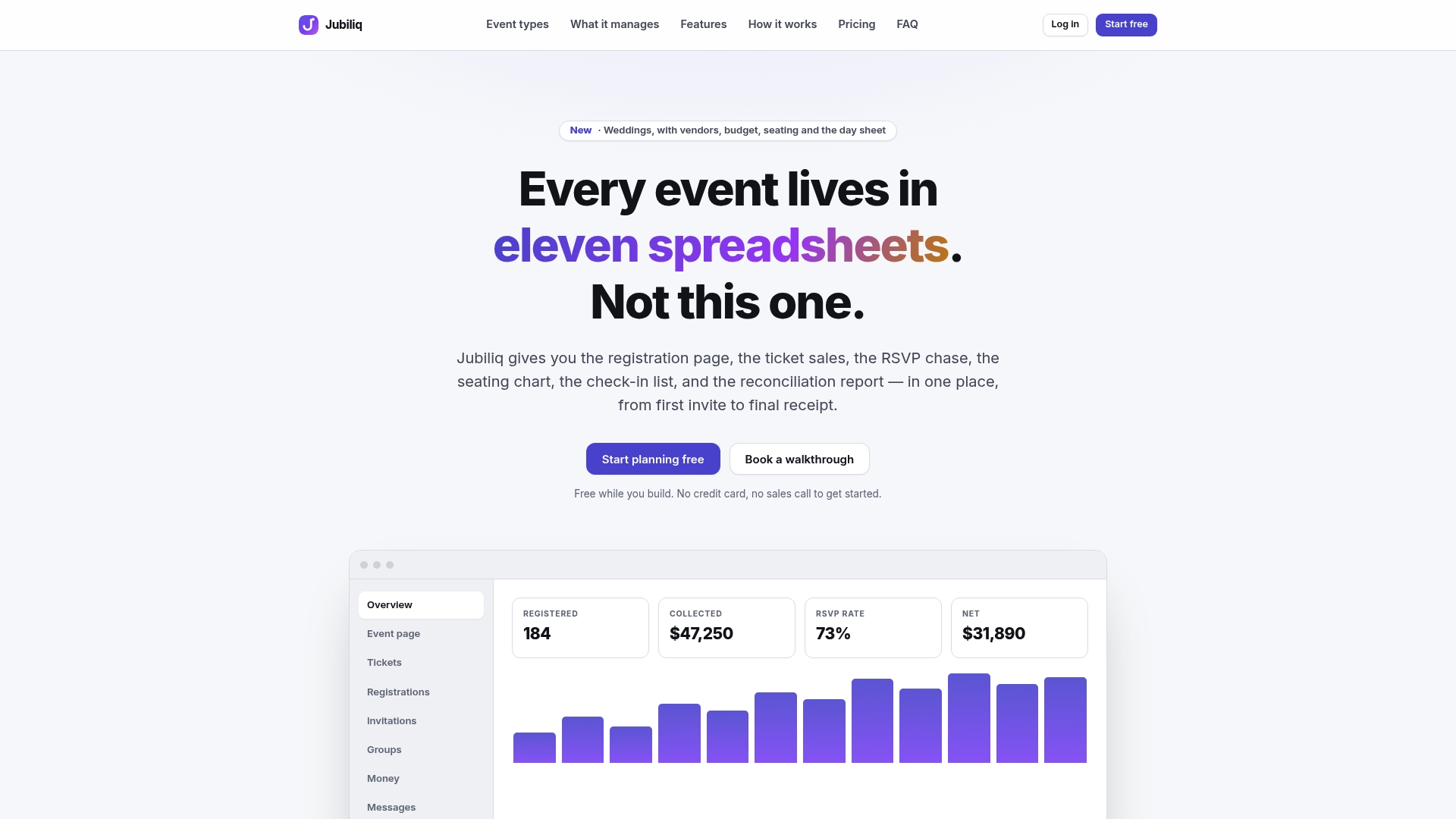
Planning-only events, including weddings and parties without paid tickets, are free on the Starter plan at $0 per event. If you sell tickets or registrations, the Organizer plan charges 2% per paid registration plus Stripe fees, and Enterprise is available for multi-event organizations. See the plans on Jubiliq.
FAQ
What are the most common dietary restrictions at events?
The most common are food allergies (peanuts, tree nuts, shellfish, fish, milk, eggs, soy and wheat), intolerances such as lactose and gluten, and vegetarian, vegan, halal and kosher requests. Plan for these first, then add a free-text field for anything unusual.
What is the difference between an allergy and an intolerance?
An allergy is an immune response that can be severe or life-threatening, even from trace amounts. An intolerance affects digestion, with symptoms like bloating or stomach pain, and is not life-threatening. Always ask guests which one applies so the kitchen can decide how strictly to separate foods.
When should I ask guests about dietary needs?
Ask at registration or RSVP, when guests are already giving you their details. Industry guidance recommends collecting requirements up front in a structured form, then sharing them with the caterer promptly. Allow a clear cutoff date for changes.
Do I have to accommodate every preference?
No, but allergies, medical diets and religious requirements deserve firm handling, while preferences can be met where practical. A flexible menu, such as one vegetarian or vegan main that is also free of the major allergens, covers many guests at once. Talk through limits with your caterer before the invitations go out.
How do I manage dietary restrictions for a large guest list?
Use one form, one master report and one named contact. Group requests by category, count them, and give the caterer the allergy list by guest name and seat. Keep every version you send.
Sources
- What you need to know about accommodating special diets in meetings
- Meeting Varied Dietary Needs, Tufts Health & Nutrition Letter
- Why do people eat different things? BBC Bitesize
- Examples of different diets, Food Standards Scotland
- Managing Dietary Requirements at Events: Checklist for PCOs and Event Planners
- How Event Planners & Vendors Are Adapting to F&B Restrictions, MPI
- FAO/WHO Expert Consultation on Risk Assessment of Food Allergens
- Food Allergies, FDA
- Allergen Removal and Transfer Using Wiping and Cleaning Methods, FDA
- How to Plan for Attendees with Dietary Requirements, Skift Meetings