40–50% to Venue: Wedding Budget Breakdown Couples Can Turn Into Quotes

40–50% to Venue: Wedding Budget Breakdown Couples Can Turn Into Quotes
Put 40 to 50% of your total budget toward venue and catering, 8 to 12% toward photography and videography, 5 to 10% toward flowers and decor, and hold back 5 to 10% as a contingency fund. That single split covers most of what a wedding budget breakdown needs to do. Everything else, from stationery to your marriage license, fills in the remaining slices. Guest count and location will move the dollar amounts a lot, but the percentages hold steady as your starting template.
TL;DR:
- The bulk of wedding costs, 40 to 50%, go toward venue and catering, which are heavily driven by guest count and can double or triple based on location and menu choices.
- Photography and videography typically account for 8 to 12% of the budget, and selecting shorter coverage or fewer options can significantly reduce this expense.
- Small line items like stationery, transportation, rings, and cake, while individually minor, can collectively comprise a substantial portion of the overall budget, especially when scaled up.
- Adjusting guest count, choosing off-peak dates, or opting for less expensive venues and bar options can yield the most substantial savings, often surpassing cuts made in decor or attire.
- Confirming vendor quotes early, understanding included services, and tracking all expenses are essential to prevent overspending and make flexible categories work within your overall budget.
Table of Contents
- The Wedding Budget Percentage Breakdown at a Glance
- What’s Actually Inside Each Wedding Budget Category
- Sample Wedding Budgets by Tier, From Modest to Luxury
- How to Build Your Own Wedding Budget Percentages
- Where to Cut Costs and What Usually Gets Missed
- Turning Percentages Into a Tracked Budget With Jubiliq
- What the Data Actually Tells You to Prioritize
- Sources
- FAQ
The Wedding Budget Percentage Breakdown at a Glance
Here’s how a typical wedding budget divides up, category by category, based on data from The Knot’s Real Weddings Study and cross-checked against WalletHub’s planning research:
- Venue and catering (bar included): 40 to 50%. This is the guest-driven backbone of your budget. Every person you add to the list pushes this number up, so it deserves the biggest slice by far.
- Photography and videography: 8 to 12%. These are the only vendors capturing something you can’t recreate later, which is why couples routinely rank this category above décor once the big day arrives.
- Flowers and decor: 5 to 10%. Seasonal blooms and labor costs swing this range more than almost any other line item.
- Music and entertainment: 3 to 7%. A DJ costs less than a live band, but bands add perceived value at the reception that some couples find worth the premium.
- Attire and beauty: 3 to 9%. This includes the dress or suit, alterations, and hair and makeup trials, not just the final look.
- Planner or coordinator: 3 to 8%. Skipping this line item often means the couple absorbs the labor themselves, which has its own hidden cost in stress and time.
- Stationery, transportation, rings, cake, and officiant: 1 to 3% each. Individually small, but they add up to a meaningful chunk when combined.
- Contingency: 5 to 10%. WalletHub and most planners treat this as non-negotiable, not optional padding.
The Knot’s most recent Real Weddings Study puts the average U.S. wedding cost at $34,200. That’s a national average, not a target. A wedding in a major metro area with 150 guests will land nowhere near a backyard ceremony for 40. Use the percentages as your framework, then plug in your own numbers once you know your guest count and market.
What’s Actually Inside Each Wedding Budget Category
Percentages only become useful once you know what they’re buying. Here’s what sits inside each line item, and how to turn a percentage into a real number for your own guest list.
Venue and rentals
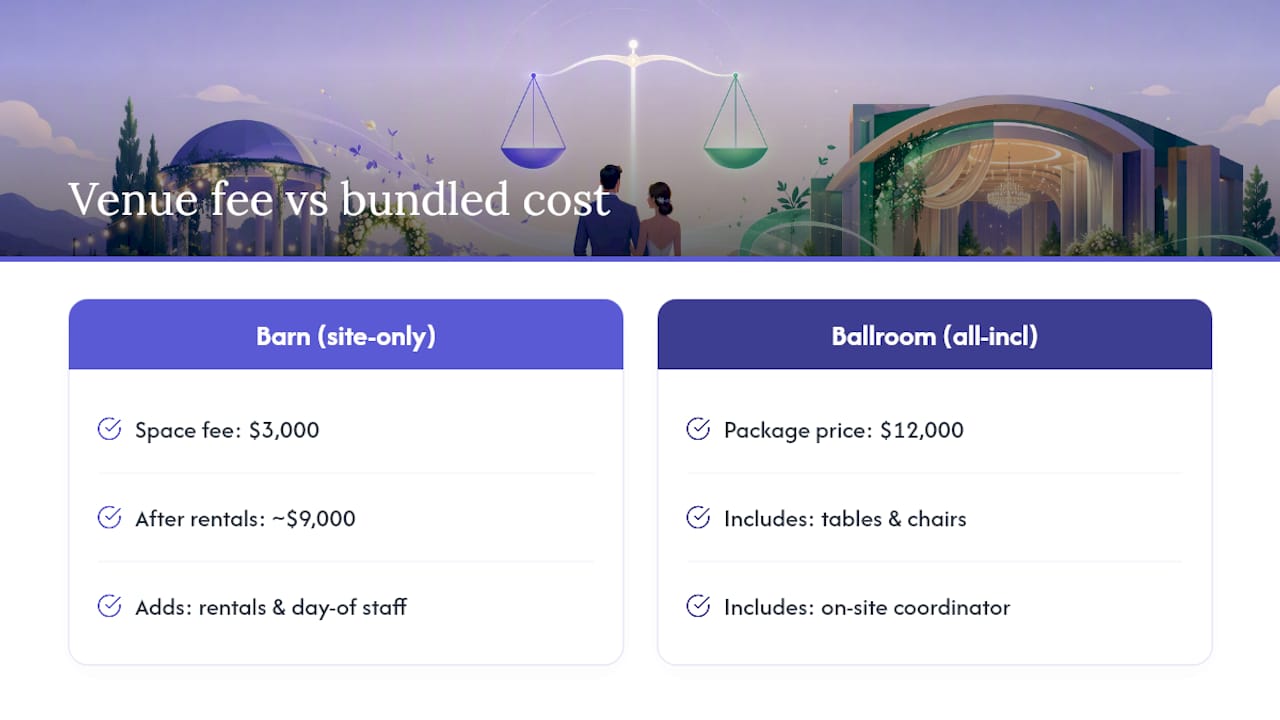
Your venue fee usually covers the space itself, but “all-inclusive” and “site rental only” venues can differ by thousands of dollars once you add chairs, linens, tables, lighting, and day-of staffing. A barn venue charging $3,000 for the space alone might actually cost $9,000 once you rent everything the barn doesn’t provide. An all-inclusive hotel ballroom at $12,000 might already include tables, chairs, and a coordinator on-site. Always ask what’s bundled before comparing two venue quotes side by side, because the sticker price alone is misleading.
Catering and bar
Catering typically runs $75 to $200 per guest depending on region and menu style, according to Pix cost breakdown data. Open bar service adds significantly more than a beer, wine, and signature cocktail setup. A limited bar can cut this line item by 20 to 30% without guests noticing much difference. Watch for service charges and sales tax on top of the quoted per-person rate.
Photography and videography
Price depends heavily on hours of coverage and what you get afterward. An eight-hour photography package with a same-day preview gallery costs less than a twelve-hour day with a second shooter, an album, and a same-day highlight video. Typical ranges run from $2,500 for a single photographer covering the essentials to $8,000 or more for photography and videography bundled with an engagement session. Vogue’s wedding budget guide notes that couples increasingly treat this category as untouchable even when they’re cutting elsewhere, because the photos and video are the only tangible product left once the event ends.
Flowers and decor
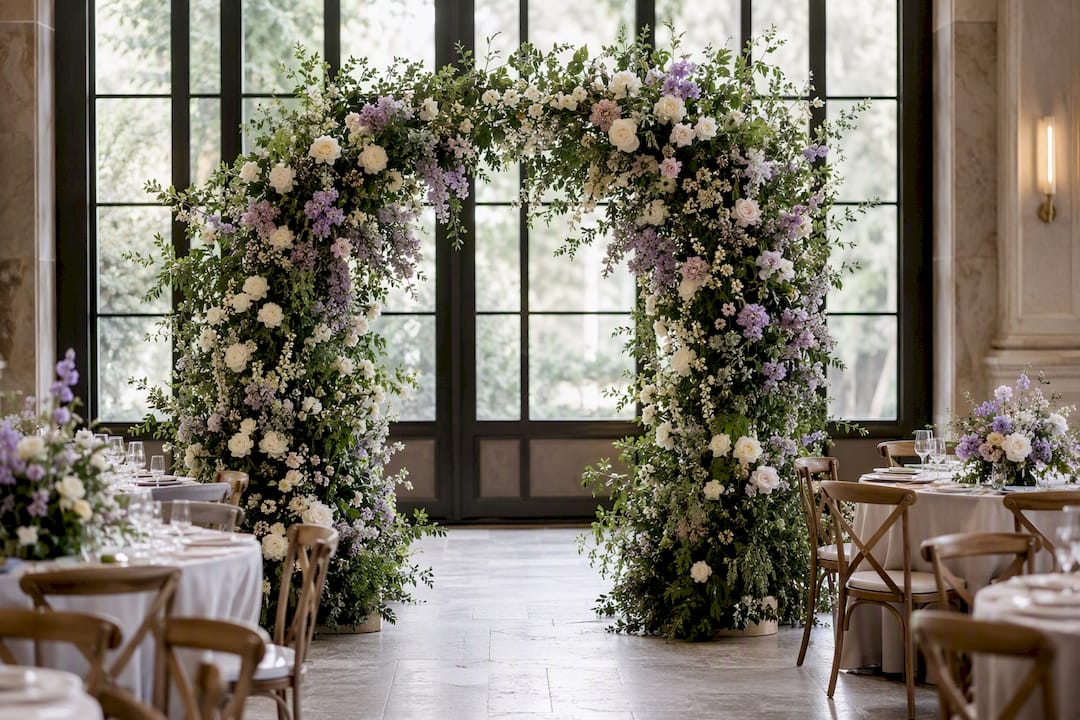
Ceremony focal points, like an arch or altar arrangement, tend to cost more per piece than reception centerpieces because they’re built to be seen from a distance and photographed head-on. Centerpieces scale with your table count, so a 100-person wedding with ten tables of ten needs roughly ten centerpiece arrangements, plus whatever you’re doing for the head table. Seasonal flowers cost less than out-of-season imports, and labor, not the blooms themselves, is often the biggest line item on a florist’s invoice.
Music and entertainment
A DJ typically costs $800 to $2,000 for a standard reception package. A live band runs $3,000 to $10,000 or more depending on the number of musicians and set length. Both options may carry extra fees for sound equipment, an MC to handle announcements, or additional performance hours if your reception runs long. If you want live music for cocktail hour without covering a full band for the reception, a solo pianist is a common middle ground, and specialists like Dustin Callahan Piano build packages specifically around that window of the day.
Attire and beauty
This category covers more than the dress or suit itself. Alterations typically run $300 to $800, and most couples underestimate that cost when they budget only for the garment. Add a hair and makeup trial, the day-of styling, and tips for your beauty team, and this line item climbs faster than most people expect going in.
Planner or coordinator
A day-of coordinator, who steps in only for the final weeks and the event itself, typically costs less than a full-service planner who’s involved from the first vendor meeting through the last dance. Full-service planning fees often run 10 to 20% of your total budget when charged as a percentage, though flat fees are common too. The value here is time and stress reduction rather than a hard dollar savings, though a good planner frequently negotiates better vendor rates than a first-time couple would get on their own.
The small categories that add up
Stationery, transportation, officiant fees, cake, and rings each take a small percentage individually, but stacked together they can equal an entire mid-size category like flowers.
| Category | Typical range | What drives the cost |
|---|---|---|
| Stationery | $500 to $2,000 | Custom printing, guest count, digital vs. paper |
| Transportation | $300 to $1,500 | Number of vehicles, hours booked |
| Officiant | $200 to $800 | Religious vs. secular, travel distance |
| Cake | $300 to $800 | Tiers, design complexity, guest count |
| Rings | 1,000 to $3,000+ per band | Metal, stone, custom design |
Miscellaneous costs that sneak up on couples
Vendor meals, overtime fees, marriage license costs, and rehearsal dinner expenses rarely get their own line item in early budget drafts, but they show up on every final invoice. Plan for them from day one instead of discovering them in month nine.
Sample Wedding Budgets by Tier, From Modest to Luxury
Percentages mean more once you see them turned into dollars. Here are four common tiers, with a focused example at the 100-guest mark since that’s the most common wedding size couples plan around.
-
Budget tier ($10,000 to $18,000, typically 50 to 75 guests). Venue and catering take roughly $5,500, photography around $1,500, flowers and decor about $1,200, music near $900, attire close to $900, and a $1,000 contingency rounds it out. DIY decor and a limited guest list do most of the heavy lifting here.
-
Mid-range tier ($25,000 to $40,000, typically 100 to 130 guests). This is where most American weddings land, and it matches Pix.Wedding’s estimate that a 100-person wedding in a mid-cost market runs $25,000 to $40,000. Venue and catering claim $12,000 to $18,000, photography $3,000 to $4,500, flowers $1,800 to $3,500, music $1,200 to $2,500, and attire $1,500 to $3,000.
-
Premium tier ($50,000 to $75,000, typically 130 to 180 guests). A full-service planner enters the budget here, often at 8 to 15% of the total. Venue and catering run $22,000 to $35,000, photography and videography combined climb to $6,000 to $9,000, and decor budgets expand to $5,000 to $8,000 as couples add lounge furniture, draping, or lighting design.
-
Luxury tier ($100,000 and up, guest counts vary widely). Percentages shift here because fixed-cost items like stationery and rings stop scaling with the budget the way venue and catering do. A luxury wedding might spend only 2% on stationery in dollar terms even though the design work is elaborate, simply because the total pool is so much larger.
For a 100-guest wedding specifically, a basic scenario might put $16,000 into venue and catering, $3,200 into photography, and $2,000 into flowers, landing around $28,000 total.
The pattern across every tier: venue and catering percentages stay relatively fixed, while planner fees and decor tend to grow as a share of the budget once couples have more room to spend beyond the essentials.
How to Build Your Own Wedding Budget Percentages
Generic percentages are a starting point, not a finished plan. Here’s how to make them yours in five steps.
-
Confirm who’s paying and set your total. Some couples fund the entire wedding themselves, others split costs with parents, and mixed arrangements are common too. Get a firm number before you allocate a single percentage point, because guessing at the total is the single most common source of budget blowouts later.
-
Lock your guest count and estimate your RSVP rate. Guest count is the single biggest lever in the entire budget, since it multiplies across catering, rentals, favors, and even stationery. Vogue’s budgeting guidance treats it as the first number to nail down before touching any vendor conversation, and for good reason: most categories scale directly with it.
-
Anchor venue and catering dollars first. Once you know your guest count, get real venue and catering quotes before locking in the rest of your percentages. These two categories eat 40 to 50% of most budgets, so everything else has to fit around whatever’s left.
-
Collect vendor quotes and adjust. Estimated ranges are useful for planning, but actual quotes are what your budget should run on. If your florist quotes $2,800 against an estimated $2,000, pull that difference from a lower-priority category rather than blowing past your total.
-
Schedule payments and track everything. Most vendors require a deposit, a midpoint payment, and a final balance due before the event. Keep a 5 to 10% contingency untouched until the final month, since last-minute additions like extra hours or rehearsal dinner costs almost always show up.
Pro Tip: If a vendor’s quote comes in over budget, ask about adjusting the package before you cut them entirely. A florist might swap a pricier bloom for a similar-looking, cheaper one, or a caterer might trim a course rather than lose the booking altogether. Vendors would rather keep the sale than lose it.
Where to Cut Costs and What Usually Gets Missed
Guest count is the highest-leverage move in the entire budget. Every additional guest adds roughly $150 to $300 once you count catering, rentals, favors, and place settings together, so trimming your list by twenty people can free up thousands of dollars for the categories you actually care about.
Beyond guest count, a few other levers move real money:
- Date and time. A Friday evening or Sunday afternoon wedding often costs less than a Saturday night, since venues and caterers price their premium slot accordingly.
- Location. A backyard or public park ceremony cuts venue fees dramatically compared to a dedicated wedding venue, though you’ll likely need to rent more equipment separately.
- Bar strategy. A beer, wine, and one signature cocktail setup costs meaningfully less than full open bar, without most guests noticing the difference.
- DIY decor. Handmade centerpieces and signage save money on materials, but only if you have the time. Hiring a professional for complex florals often costs less overall than the hours a DIY project eats up.
Hidden costs deserve their own checklist, since they’re what actually blows past a carefully built budget. Watch for service charges and sales tax on catering, vendor overtime fees if your reception runs long, vendor meals (most contracts require you to feed the photographer, DJ, and coordinator), dress alterations, vendor tips (often $500 to $1,500 total across your vendor team), your marriage license fee, and a rehearsal dinner if you’re hosting one.
Pro Tip: Before signing any vendor contract, ask three questions: What’s included versus billed separately? What’s the overtime rate if the event runs long? And what’s the cancellation or rescheduling policy? Vague answers to any of these are a red flag worth pausing over.
Turning Percentages Into a Tracked Budget With Jubiliq
A percentage breakdown on paper is only useful if it stays updated as real quotes come in.
Some event planning platforms offer connected guest list and budget tools that recalculate per-guest cost estimates automatically. Features may include payment milestone tracking, exportable financial reports for sharing, and printable day sheets consolidating event details for vendors and the wedding party. You can see how it works at Jubiliq.
What the Data Actually Tells You to Prioritize
The conventional wisdom on wedding budgeting spends too much time on rigid percentage tables and not enough on the one variable that actually drives cost: your guest list. Cut ten names and you’ve probably saved more money than any amount of DIY centerpiece labor ever would.
Where most budget advice falls short is treating every category as equally flexible. It isn’t. Venue and catering are guest-driven and largely fixed once your headcount is set. Photography is a one-time purchase you can’t renegotiate after the fact. The categories with real flexibility are flowers, music, and stationery, and that’s where trims should happen first, not last.
If there’s one thing worth doing before any vendor call, it’s locking your guest count and getting real venue and catering quotes. Every other percentage in this breakdown should adjust around those two numbers, not the other way around.
— HCRF
Sources
The percentage ranges in this breakdown come primarily from The Knot’s Real Weddings Study, WalletHub’s wedding budgeting research, Vogue’s wedding budget guide, and Pix.Wedding’s cost breakdown. Charles Schwab’s wedding budgeting guidance also informed the financial planning steps in this guide. National averages are a useful baseline, but always check quotes from vendors in your own market. A $34,200 national average means very little if you’re planning a wedding in a city where venue costs alone can double that number.
- Wedding Budget Breakdown: How to Calculate and Budget Wedding Costs | Vogue
- How to Budget for a Wedding (WalletHub)
- Pix
FAQ
How does guest count affect my wedding budget breakdown?
Each additional guest adds roughly $150 to $300 once catering, rentals, favors, and place settings are counted together, making guest count the single biggest cost driver in most weddings.
Should I hire a planner if my budget is tight?
A day-of coordinator costs far less than full-service planning and still helps you avoid the overtime fees and vendor mix-ups that often blow past a tight budget.