Fundraisers: Golf Outing Sponsorship Packages From $200 to $25,000

Fundraisers: Golf Outing Sponsorship Packages From $200 to $25,000
Offer one title or presenting sponsor, three to four mid-tiers, and accessible hole-level options, then layer in a few paid activations that sponsors actually want to attach their name to. That structure covers every budget size, from the $5,000 corporate anchor to the $200 hole sign a local shop can afford. Price bands, fill-in templates, and outreach steps follow below, and a tool like Jubiliq can handle the ticketing and tracking once sponsors say yes.
TL;DR:
- Sponsorship levels range from $200 for hole signs to $25,000 for top marquee slots, with most events selling between $15,000 and $50,000 in total revenue.
- On-course activations like beverage cart branding and tee-box experiences significantly increase sponsor contributions beyond basic sponsorship tiers.
- Clear, adaptable templates for sponsorship proposals and agreements help secure commitments and ensure sponsors understand deliverables and deadlines.
- Tracking metrics and providing post-event reports increase the likelihood of sponsor renewal by demonstrating tangible return on investment.
- Using event management software to streamline sponsorship administration saves time, improves accuracy, and enhances sponsor engagement and retention.
Table of Contents
- Golf Outing Sponsorship Levels and What They Cost
- What On-Course Activations Actually Get Sponsors To Say Yes?
- How Do You Build a Sponsorship Packet Sponsors Will Actually Sign?
- What’s the Best Way to Pitch and Close Golf Sponsors?
- What Should Your Total Sponsorship Program Budget Look Like?
- What Legal and Compliance Details Belong in a Sponsorship Agreement?
- How Do You Report Results and Keep Sponsors Coming Back?
- A Planner’s Take: The Mistakes That Cost You Sponsors
- How Jubiliq Handles the Sponsor Admin You Don’t Have Time For
- Sample Packets Worth Adapting
- Sources
Golf Outing Sponsorship Levels and What They Cost
Charity golf outings and corporate tournaments both build their sponsor menu around the same skeleton: one marquee slot at the top, a handful of mid-priced tiers, and cheap entry points at the bottom. Sample packets from real events show title and presenting sponsors priced anywhere from $5,000 to $25,000. That spread depends heavily on region, field size, and whether the sponsor gets naming rights on the event itself.
Here’s how the typical ladder breaks down:
- Title/Presenting sponsor ($5,000 to $25,000): naming rights on the event, top logo placement, a speaking slot at the dinner or awards ceremony, multiple foursomes, and first mention in every press release.
- Premier/Course sponsor ($2,500 to $5,000): course-wide signage, a foursome or two, VIP hospitality access, and prominent placement in the event program.
- Dinner or lunch sponsor ($1,500 to $3,000): exclusive branding at the post-round meal, a foursome, and a mention during announcements.
- Gold/Silver/Bronze tiers ($750 to $2,000): a foursome or twosome, program ad space, and signage at a shared location like the driving range.
- Hole, cart, or menu sponsor ($200 to $750): a single tee sign, cart decal, or scorecard mention, usually with one or two player entries thrown in.
Insights from actual sponsorship packets show title slots stay rare and expensive because they carry naming rights and VIP hospitality, the two deliverables corporate sponsors care about most. Every tier, no matter how small, should promise something visible: signage, a program ad, or a social media shoutout. Real packets consistently list signage, program ads, social recognition, and email mentions as the baseline expectation across every level, not just the top one.
What On-Course Activations Actually Get Sponsors To Say Yes?
Line-item tiers get sponsors in the door. Activations get them to write a bigger check. A hole-in-one contest backed by a prize-indemnity insurer lets you advertise a $10,000 or even a car giveaway without your organization covering the payout if someone actually sinks it, and that kind of insured contest consistently pulls premium sponsor dollars because it gives the sponsor a headline moment tied directly to their name.
Beyond the contest hole, a few activations reliably earn their premium pricing:
- Beverage cart branding — a rolling billboard that touches every group on the course, priced as an add-on to any tier.
- Tee-box activations — a branded tent, a rep handing out samples, or a mini product demo at a marquee hole.
- Swag with staying power — branded golf balls, towels, or koozies that outlive the event by months.
- Digital recognition — sponsor logos rotated through event photos, post-event email blasts, and social recap posts.
- Hospitality add-ons — a VIP tent at the 19th hole where sponsors mingle directly with attendees.
Organizers who stay flexible on activations and build a custom experience around a sponsor’s actual marketing goals tend to close bigger deals than those who just hand over a printed menu. If a beverage distributor wants exclusive cart rights instead of a generic gold sponsorship, build them a one-off package.
Pro Tip: Price activations as add-ons to an existing tier rather than standalone products. A $500 beverage cart add-on feels reasonable stacked on a $1,500 gold sponsorship; it feels arbitrary as a lone line item with no context.

How Do You Build a Sponsorship Packet Sponsors Will Actually Sign?
A packet that sells starts with three fill-in templates you can adapt in an afternoon rather than build from scratch.
Title/Presenting template: Event naming rights, logo on all marketing materials, two foursomes, a five-minute speaking slot, full-page program ad, and top billing on the event website and social channels.
Mid-tier bundle template: One foursome, half-page program ad, tee-box or driving-range signage, and inclusion in the post-event sponsor thank-you email.
Entry-level hole template: One tee sign, a single player entry, and a listing in the printed program’s sponsor roster.
Layer in an add-on menu so sponsors who like a lower tier can still spend more:
- Speaking slot at the awards dinner: $500 to $1,000
- Logo insertion in player swag bags: $250 to $500
- Branded table or tent at registration: $300 to $750
- Beverage cart exclusivity: $500 to $1,000
Before you send anything out, run through a compliance checklist: logo file specs (vector format, transparent background), the commitment deadline, the logo submission deadline, accepted payment methods (check, card, invoice), and a line confirming the sponsor carries their own liability coverage for any on-site activation they staff. Packets with clear deadlines and payment terms close faster because sponsors know exactly what’s expected and by when.
What’s the Best Way to Pitch and Close Golf Sponsors?
Start with your warmest list: board members’ employers, sponsors from last year’s outing, and local businesses whose customer base overlaps with your golfers. Cold outreach to a national chain rarely beats a five-minute call to the print shop owner who sponsored you last spring.
- Email the packet with tier options and a personal note referencing why this sponsor fits.
- Follow up by phone within a week if you hear nothing back.
- Send a formal proposal once they express interest, tailored to their stated budget or marketing goal.
- Offer a site visit or course walkthrough for anyone considering a title-level commitment.
Negotiation works best when you treat the printed tiers as a starting point, not a fixed menu. A local restaurant might prefer covering the dinner in-kind rather than paying cash for a gold sponsorship, and that trade often works out better for both sides. Set a firm logo deadline (typically three to four weeks before the event) and a payment deadline tied to invoice date, not event date, so cash flow doesn’t stall your printing schedule.
Pro Tip: Send a one-page confirmation email the moment a sponsor verbally commits, listing their tier, deliverables, and both deadlines in writing. It prevents the “I thought I was getting a foursome” conversation two weeks before the event.
What Should Your Total Sponsorship Program Budget Look Like?
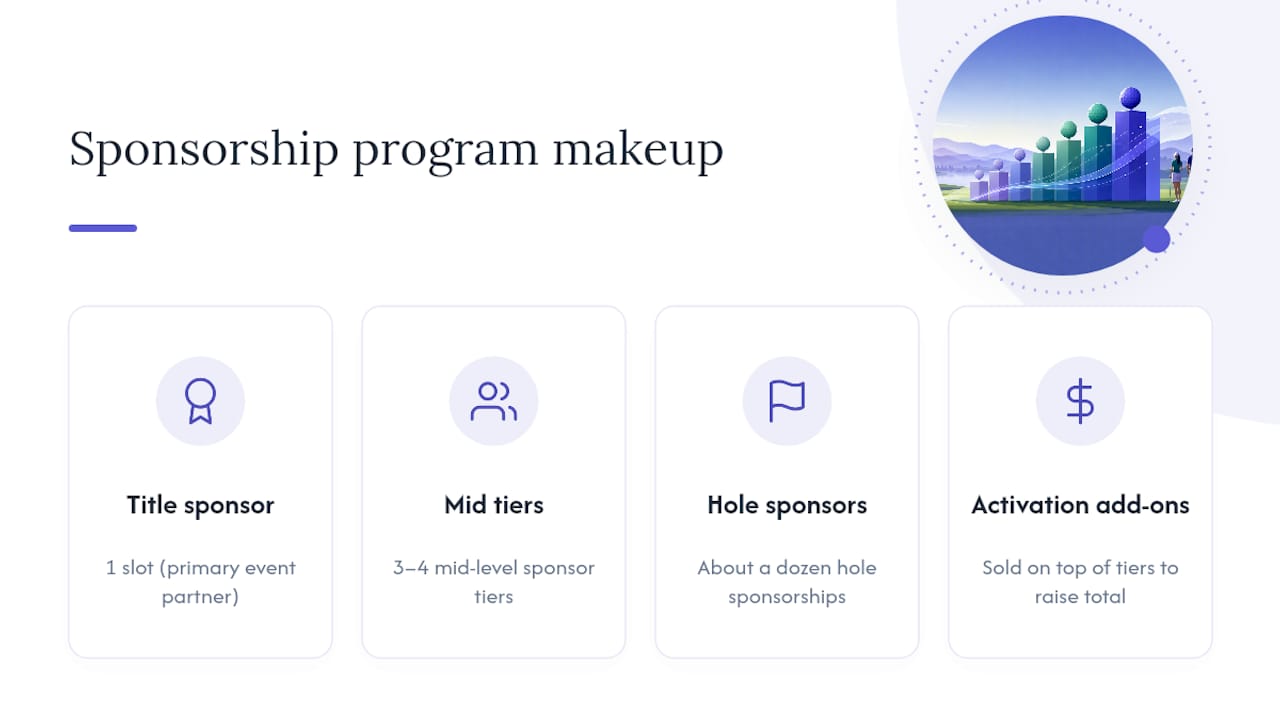
Most single-day charity golf outings that build a full tiered sponsorship program end up selling somewhere between $15,000 and $50,000 in total sponsorship revenue, depending on field size and region. A 100 to 144 player field with one title sponsor, three or four mid tiers, and a dozen hole sponsors typically lands in that range once you add activation add-ons on top.
Budget your own costs against that revenue target before you finalize pricing. Course fees, insurance for any hole-in-one contest, printing for programs and signage, catering, and staff time all eat into the gross sponsorship number.
Don’t set your tier prices in a vacuum. Look at what comparable outings in your region charge for a title slot, then adjust based on your own draw. An outing that reliably fills 18 holes with a waitlist can charge more per tier than one still building its reputation. If last year’s outing sold out every hole sponsorship within a month, that’s a strong signal you can raise entry-level pricing by $50 to $100 without losing sponsors. If several tiers went unsold, drop the price or bundle unsold slots into a discounted package rather than leaving them empty on event day.
What Legal and Compliance Details Belong in a Sponsorship Agreement?
Every sponsorship, even a $200 hole sign, is technically a contract. Put the deliverables in writing: exactly what signage, how many player entries, which program ad size, and what happens if weather cancels the event. A one-page agreement protects both sides better than a verbal handshake at the clubhouse bar.
Cover liability explicitly if a sponsor plans any on-course activation involving staff, samples, or equipment. Require sponsors staffing a tent or beverage station to carry their own general liability coverage, and state that in the agreement rather than assuming it. If you’re running an insured hole-in-one or prize contest, confirm the indemnity policy covers the specific prize amount advertised. A $10,000 prize claim against an underinsured policy becomes your organization’s problem, not the insurer’s.
Nonprofit organizers need to address tax treatment too. Sponsorship payments that include substantial advertising value (logo placement, product promotion) are typically treated differently than a pure charitable donation for tax purposes, and the dollar value of any goods or services the sponsor receives (green fees, meals, swag) generally needs to be disclosed to them in writing so they can determine their own deductible amount. Cancellation and refund terms matter just as much: state clearly whether a sponsor gets a partial refund, a credit toward next year’s event, or nothing if the outing is canceled for weather or low registration.
How Do You Report Results and Keep Sponsors Coming Back?
The sponsors who renew year after year are the ones who get proof their money worked. Tracking metrics like sponsor email open rates, social media impressions, and attendee demographics after the event gives you concrete numbers to hand back to every sponsor, and that follow-up report is often the single biggest factor in whether they sign again next year.
Build a simple post-event report template you send within two weeks of the outing: total attendee count, photos showing their signage or activation in use, social media reach if you posted sponsor tags, and a thank-you note referencing anything specific that went well (a sponsor’s contest hole getting extra buzz, for instance). Sponsors remember specifics more than generic thanks.
Track a short list of numbers for your own records, too: which tier each sponsor bought, whether they upgraded or downgraded from the prior year, and any feedback they gave about deliverables. That history turns your outreach for next year’s outing into a warm renewal conversation instead of a cold pitch. A sponsor who sees their beverage cart activation photographed and shared to your event’s social following is far more likely to renew than one who wrote a check and never heard from you again until the next ask.
A Planner’s Take: The Mistakes That Cost You Sponsors
Overcommitting kills more sponsorships than underpricing does. Promising a foursome, a speaking slot, and exclusive signage to three different sponsors at the same tier creates a mess you can’t fix on event day. Write deliverables down, confirm them in a short email the moment a sponsor commits, and set your logo and payment deadlines early enough to leave room for the sponsor who’s always late. Clarity closes deals better than charm does.
— HCRF
How Jubiliq Handles the Sponsor Admin You Don’t Have Time For
Chasing logo files, tracking who paid by check versus card, and manually assigning foursome tickets eats hours you don’t have during outing season. An event planning platform can integrate sponsorship ticketing with RSVP and budget tracking, so a sponsor’s payment, tier, and player entries appear together in one dashboard instead of scattered across multiple spreadsheets.
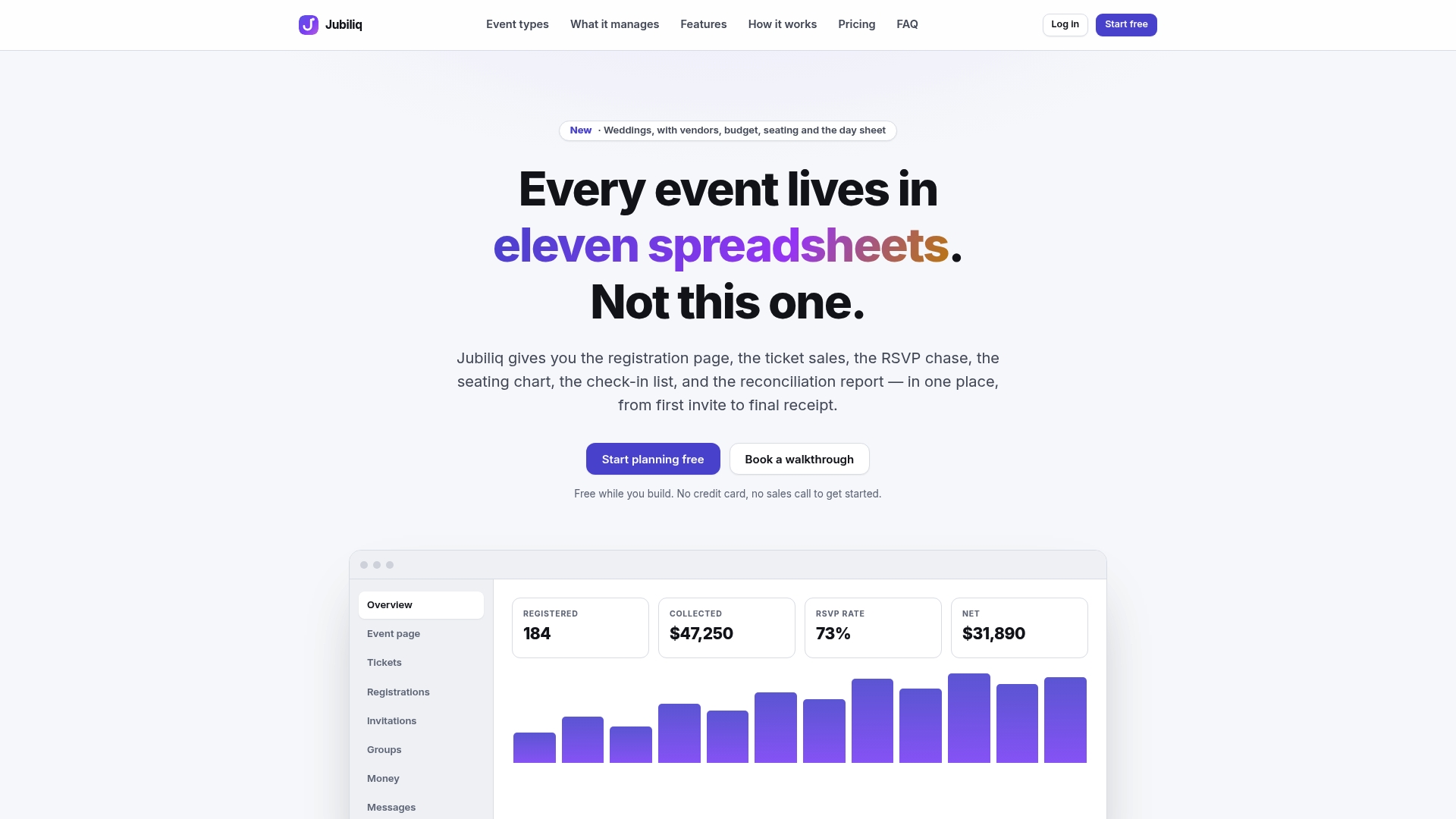
Budget tracking tools can show sponsorship revenue against event costs in real time, helping you know whether you’ve hit your target before the tournament starts. Printable day sheets can consolidate sponsor deliverables (like signage location, player names, and program ad status) into one document for volunteers to check off on-site. When selling player tickets or accepting donations alongside sponsorships, these can be handled through a single registration system instead of separate tools. Visit Jubiliq to see how the sponsorship and ticketing workflow fits your next outing.
Sample Packets Worth Adapting
The RMHC Carolinas golf classic packet and the MITA golf sponsorship page both show real pricing and modular bundles worth studying. Adapt the language and numbers to your own field size and market rather than copying either one directly.